Note: To the best of my knowledge, the following analysis of the concept of “fairness” is original; neither Ayn Rand, nor anyone else has analyzed it this way. My analysis of fairness was performed in light of the Objectivist theories of concepts and values. As should become clear to readers familiar with John Rawls and his work, this essay also stands as my refutation of John Rawls in A Theory of Justice.
—–
How many times have you heard people say “Life isn’t fair,” with a resigned shrug, as though this “obvious fact” means there is something inherently wrong (“imperfect”) in the nature of things?
Well, they are right that life, in general, isn’t fair. But this does not mean that “something is inherently wrong,” because life is not unfair, either. Life, in general, is neither fair, nor unfair, because the concept does not apply to life in general.
The concept of fairness comes up in a specific context. The context in which the concept of fairness applies, is that of a zero-sum game designed to test a certain attribute or set of attributes. Saying the game is “zero-sum” means that one person’s win ensures another’s loss; not everyone can win. Such games may be designed to test strength, agility, mental acuity, knowledge, etc.
The rules or circumstances of such a game are said to be “fair” if they are designed in such a way that the game accurately measures the attribute(s) or skill(s) being tested. Those with the greatest measure of the attribute(s) in question are very likely to win. The rules or circumstances of the game are said to be “unfair” if they don’t accurately measure the attribute(s) in question. For example, a race in which one runner starts before the others is unfair, because the others may be faster than that runner, yet not win the race, (which is a zero-sum contest to determine who is fastest.)
But life in general is not a zero-sum game. Because the values that sustain and enrich each person’s life must be produced, rather than taken from others, one person’s gain does not imply another’s loss. Life, in general, is not about winning or losing, it is about production of life-enhancing values. (For further explanation and clarification of this, I refer you to Ayn Rand’s explanation of human nature and morality in The Virtue of Selfishness , the explanation of free markets in Capitalism: The Unknown Ideal
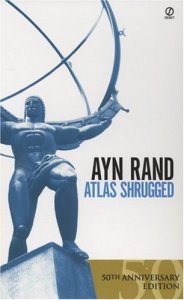
 , the novel Atlas Shrugged
 , and to Objectivism: The Philosophy of Ayn Rand
 .)
.)
The concept of fairness can be expanded slightly to include such things as trials, in which the defendant “winning” means acquittal, and his “losing” means conviction. The rules in a trial are designed to test the state of genuine evidence against the accused.
But, once again, life as a whole is neither fair, nor unfair, because the concept does not apply. It is neither zero-sum, nor is it artificially designed to test anyone, and both are required for “fairness” to apply. (In this sense, calling life “unfair” is similar to calling a rock “evil.” The rock doesn’t have the attributes necessary for “evil” to apply.) (1)
Often, people will talk about “fairness,” while actually meaning “justice.” But these concepts are not equivalent. Justice is a broader concept than fairness. It is a moral concept that applies to all freely chosen human actions in dealing with others. (2) Justice applies in two related senses: as a personal virtue, and as a societal condition. As a personal virtue, justice means rewarding virtuous behavior and punishing vicious behavior. In other words, rewarding the good and punishing the evil, to the extent of that goodness or evil. In the Objectivist ethics, good behavior is constructive to the lives (rational values) of those close to it, whereas evil behavior is destructive to the lives (rational values) of those associated with it. Thus, the rewarding of those who are good and the punishment and shunning of those who are immoral or evil is a personal virtue, serving to promote and protect one’s own life.
As a societal condition, justice rests on the fact that, in the large majority of cases, good behavior is rewarded and evil is punished, within the society. The extent to which the results of choices (gain/loss of values) match the moral status of those choices, (good/evil) is the extent to which the society is just.
The most important, all-encompassing condition of societal justice is the protection of individual rights to life, liberty, and property. This is essentially equivalent to freedom; that is, freedom from the initiation of physical force or fraud by others. By far, the most pervasive way that people can be punished for doing good things is by force. Stealing (private or governmental) punishes wealth creation and rewards those who haven’t worked to produce wealth, (i.e. things of value.) Extortion punishes wealth production and integrity, (acting according to one’s own judgment) since if one doesn’t act against his own judgment and give in to the extortionist, he is punished. Rape punishes a person just for having a body and being a sexual being. Initiated physical violence or unprovoked imprisonment punishes a person for existing.
Freedom from these punishments is the most basic thing that allows people to be rewarded for good (human life-promoting) behaviors, such as thinking independently, producing wealth, being honest, judging justly, etc. Since human life (the good) is sustained and enriched by the independent thought of each individual, each individual should be rewarded in proportion to his mental effort/virtuous actions, as he would be, were he alone on a large island. (Whether the productive activities in a society are solitary or cooperative, it is still the case that each individual must bear the responsibility for his own mental effort/virtuous actions, or lack thereof. No one can think for him, and even if he learns from others, it is he who must think in order to learn.) Thus, the freedom from coercion (robbery, enslavement, etc.) by others that each individual would have on a deserted island is the essential requirement of a just society. (3)
Now, let’s take two cases and see if and how the concepts of “fairness” and “justice” apply to them.
Case 1: One child is born with sight, while another is born blind. Is this fair or unfair? It is neither. The one child was not given his sight at the expense of the other, and life is not a win-lose contest of who can perform more capably in jobs that require sight. The state of blindness is objectively inferior to having sight, and it is desirable that the blindness be cured, but there is no basis for the term, “unfair.” No one set up a win-lose competition between the two children.
Is this situation just or unjust? Once again, it is neither. Justice, as a moral concept, is applicable only to those facts that are chosen by human beings. Being born blind is generally not the result of anyone’s choices. The birth was the result of human choice, but the blindness was not. The situation is, in Ayn Rand’s terminology, a “metaphysically given” condition–as opposed to a “manmade” condition. Manmade conditions are chosen, and thus subject to moral evaluations, but metaphysically given ones are not; they just are the way they are, and that’s it.
Case 2: One child is born into a wealthy family, while another is born into a poor family. The child of the wealthy family gets all the benefits of a good school, good parenting, good dental care, etc. The child of the poor family drops out of school to work, has somewhat neglectful parents, doesn’t have access to the same level of health care, etc. Is this situation fair or unfair? Again, it is neither. The child of the wealthy family does not have the benefits of wealth at the expense of the child of the poor family. Life is not a race for pleasures, education, jobs, or opportunities. Wealth is desirable. It is nice to be born into a wealthy family. But wealth, when earned, is created, and one family’s wealth does not cause another’s poverty (so long as it isn’t stolen.)
Is this situation just or unjust? As far as the child is concerned, the simple fact of being born—of being brought into existence—can never be either just or unjust to him. Being brought into existence is neither reward, nor punishment; there was no living entity there to be rewarded or punished. In principle, one can morally judge the decision of the parent(s) to have the child on the basis of the effect on the parents’ lives. Once the child is born, it is possible for the parents to be just or unjust to the child. But the mere fact of the level of the family’s wealth can be considered neither a punishment nor a reward for the child.
The justice of the above situation, with regard to wealth, applies to the parents. It is whether or not the wealth of the parents was freely earned, (i.e. earned by the production of objective values, which were then traded by mutual, voluntary consent) and whether or not wealth was stolen from the parents. If all wealth was freely earned, and none was stolen, then the situation is fully just. The benefits that the child of the wealthy family gets are the result of the parents using their justly earned wealth (reward) to promote their own values—specifically, their child’s well-being.
But the child’s actual, long-term happiness has relatively little to do with the wealth of his parents. It has much more to do with the child’s own choices, so long as he lives in a largely free society.
The world is rife with thoughtless, (self-) spoiled, lazy, wasteful, deeply unhappy heirs and heiresses. No amount of unearned money will buy the clarity, serenity, purposefulness and achievement-oriented lifestyle necessary for the deep enjoyment of wealth. No amount of brainless partying will fill the hole in one’s self-esteem left by one’s own lack of thought and purposeful achievement.
The world also contains those who started out in poor families, had to work themselves through school, had to contend with neglectful alcoholics in their families and other problems, yet they rose above that and made successful, happy lives for themselves, essentially through their own choices. The poverty of their childhood did not cripple their happiness for life.
What makes this latter case possible is freedom in society; that is, freedom from coercion by others, including the government. This is freedom from censorship by the government, freedom from being coerced into trade guilds that keep an individual in a certain class, freedom from onerous tax burdens and tax incentives that drain wealth, foreclose opportunities and distort people’s economic judgment, freedom from coercion into or out of certain contractual relationships, (e.g. antitrust statutes and minimum wage laws) freedom from government-mandated business/professional/product licensing and the corrupt politicians and businesses that conspire to forcibly keep competition out of their field, etc. The extent to which force rules in a society—whether it is initiated by the government or by gangs—is the extent to which the society does not allow economic rewards to be based on the free choice to produce wealth (things of value that sustain and enrich human life), and thus, is the extent to which the society is unjust. This is the extent to which cases of the “self-made man,” who became wealthy and successful essentially through reliance on his own thought and judgment, become rare; and this is also the extent to which cases of the idle/unproductive rich become commonplace. (4)(3)
In summary, “fairness” is only for games and trials; “justice,” as a general societal condition, applies to manmade institutions and requires laissez-faire capitalism, as it was described by Ayn Rand.
—–
(1) There is another sense in which people speak of “being fair” in conversations and friendships. This is a minor, derivative meaning that is distinct from the major meaning, and not relevant to my current point. It means to adhere to certain rules that promote productive dialogue and mutually satisfying friendships.
(2) Except in emergencies, in which an immediate physical threat makes one’s own short-term survival incompatible with the otherwise proper evaluation of others.
(3) Again, I recommend Ayn Rand’s works, such as The Virtue of Selfishness and Capitalism: The Unknown Ideal for further explanation and clarification.
(4) What I mean, more precisely, is that government-granted subsidies, protections or monopolies are what allow people to be idle/unproductive and still become wealthier and stay wealthy, themselves. They are what allow long dynasties of unproductive rich to flourish, thus hindering economic justice.
—–
Related Posts:
Why Fairness Does Not Mean Justice: Some Further Argument
Wealth is Created by Action Based on Rational Thought
How Business Executives and Investors Create Wealth and Earn Large Incomes
Atlas Shrugged, Altruism and Egoism
America Before The Entitlement State

 Objectivism In Depth