As I write this, the United States of America, with the most powerful military in the history of the world, stands a very good chance of losing this current war with Iran, started in 2026. The US military has done far more damage to Iran’s government structure, military personnel and military equipment than Iran has done to the US’s.
Yet the level of damage done to the enemy military or country is not what determines who wins and who loses a war. It is the side that gives up its stated objectives and leaves the fight, in the face of determined opposition by the other side, that loses the war.
At the start of the war, Donald Trump stated that he wanted to 1) end the ballistic missile threat of Iran, 2) end Iran’s nuclear weapons program, and 3) end Iran’s support for proxies that threaten US interests and personnel. More recently, he has also stated 4) that the Strait of Hormuz needs to be reopened without any Iranian tolls or fees.
So, if the US ends the war and blockade without a substantial nuclear deal or the seizure of all of Iran’s enriched uranium, without securing Iranian compliance on ballistic missiles, while the Houthi proxies of Iran are threatening shipping in the Bab al-Mandab Strait, and in the process, leaves Iran with the ability to control traffic in the Strait of Hormuz and charge tolls on ships, then this counts as a complete US capitulation and loss of the war.
Unfortunately, Trump’s handling of the Iran war has led to a heavy buildup of pressure on him to stop the war like this, without achieving any of his stated objectives, and while handing at least partial control of the Strait of Hormuz over to Iran. (This control violates all international norms of the seas and amounts to a special privilege granted to the Islamic Republic of Iran that no other nation gets.)
This Iran war has led to major disruptions in the supply of oil and other goods from the Persian Gulf, generating serious shortages and price spikes. Also, as Donald Trump has justified and pursued it, this war is not very popular in America. A July 2026 poll by the University of Maryland found that 52% of Americans think that the US should end the Iran war now, and only 21% thought the US should use military force as necessary to prevent Iran from acquiring nuclear weapons. (The other 79% either favored diplomacy, or didn’t know what they thought.)
But, Donald Trump’s particular justifications and methods of fighting the Iran war aside, I think that a United States war against the Islamic Republic of Iran is completely justified. In fact, I would say that it is among the most justified military actions in the history of the United States: far more so than Vietnam, Korea, World War I, and Iraq, and perhaps even surpassing World War II and the War of 1812.
Why is such a war against Iran so justified? Because of Iran’s very long history of attacking the US by proxy, every chance it gets, and because of the nature of the Islamic Republic regime.
Summary
- To win a war means to make the other side capitulate and allow you to achieve your objectives, without further forcible opposition.
- The US war in Iran is unpopular in America and there is mounting pressure on Donald Trump to stop.
- America is in danger of losing the Iran war of 2026 because, even though it has inflicted massively disproportionate damage to Iran’s government and military, it looks to be the side that will back down from the fight, without achieving its objectives.
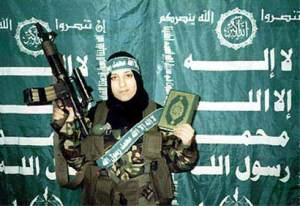
- A war against Iran is fully justified by Iran’s long history of proxy and direct attacks on US facilities and personnel, resulting in hundreds of American deaths. The Islamic Republic is basically the world leader of Islamist terrorism against America, Israel and the West.
- So the war against Iran should be continued and won. How can this be accomplished? Let’s look at what we know:
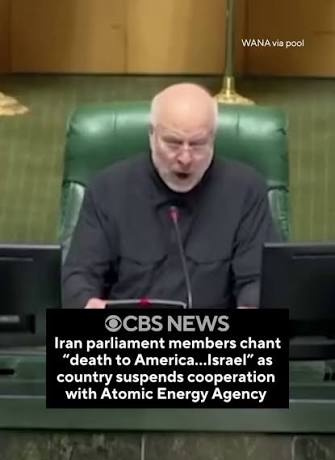
- The Islamic regime of Iran are all religious zealots who will never make a good-faith deal and will never give up their attempts to establish totalitarian Islam as the ruling ideology of the world. The supremacy of Islam and the duty to spread it abroad by revolutionary struggle is in the Islamic Republic’s constitution. These fanatics have shown they don’t care about oil or the Iranian economy, unless they can use them to help the triumph of Shia Islam in the world. The only way to end the ballistic missile and nuclear threat from the Iranian regime is to overthrow that regime.
- But the Iranian people are different than the Islamic regime, and the large majority, (about 90%) do not support the regime. Their mass protests have been brutally put down by the Islamic regime in a huge massacre. They want freedom, but they need to be trained, armed and organized to be effective in fighting the Islamic Revolutionary Guard Corps (IRGC).
- The Iranian people are different than the people of Iraq and Afghanistan. They are not tribal, like most Iraqis and Afghanis, and they are much more educated and individualistic than Afghanis. Iranians have already experienced something close to a modern, Western society and lifestyle. Unlike these other two national populations, most Iranians are ready for a transition to a modern, unified, stable, republican government, with democratic elections.
- Given these facts about the Iranian regime and the Iranian people, I propose a US strategy that frees the Iranian people and effectively leverages them against the regime:
- The US should employ a few Marine Expeditionary Units (MEUs) to establish a heavily defended base on the southern coast of Iran, in a rural area, (after preparing the area with airstrikes against any IRGC nearby.)
- With the base established, the US would put out the message to a nearby town that those who wish to be free of the Islamic republic, and do their part to fight it, should come to the base, bringing food, water, and any weapons they have. After depositing their weapons at the entrance to the outer perimeter and undergoing a long-distance strip-search, they would be allowed into the base to take an oath against the regime, be trained and organized. On leaving the base, they would be armed for the fight with the IRGC.
- When the people of the first town are nearly finished with their training, the call would go out to the next town, and the process would repeat. The process would work its way through nearby towns and cities, until you have an army capable of building itself, taking IRGC weapons, and gradually eliminating the IRGC throughout the entire country.
- This would all be done, initially, under heavy air defense and under air cover by the US Navy and Air Force.
- Donald Trump’s negotiations with–and his moody, whiplashing pronouncements on–the Iranian regime have given them hope that they can either get him to compromise away his objectives, or outlast his resolve to defeat them.
- What you need to win a war is a constant message to the enemy: “You will capitulate, or you will be destroyed; there is no hope of victory for you.” Trump’s negotiations and capricious statements in this war have completely undercut and subverted that message to the Iranian regime. It’s time they heard it loud and clear.