Why Definitions Must Be Justified by Evidence

An amazing Earth with rising sun and water. Philosophy tells us what we can know by reasoning about the origin of water.Are definitions a matter of arbitrary social convention?
Well let’s find out if it makes sense to say that they are. Let’s imagine that Adam’s culture defines “space pixie” as “one of the living creatures that has wings, and whose species is solely responsible for bringing water to Earth.”

If definitions are arbitrary matters of social convention, then Adam can reason like this:

  • Premise 1: If there is water on Earth, it was brought by space pixies.
  • Premise 2: There is water on Earth.
  • Conclusion 1: Therefore, (only) space pixies brought water to Earth.
  • Premise 3: All things that bring water must exist at the time it is brought.
  • Conclusion 2: Therefore, space pixies must have existed.

This argument is deductively valid: If the premises are true, then the conclusions must also be true.

Furthermore, this argument is sound (has true premises and is valid–irrefutably correct) given the stated definition of “space pixie.” If definitions are arbitrary cultural inventions, then Premise 1 is “analytic”–that is, it is true purely by definition: One need only examine the definition of “space pixie” to find that Premise 1 is true. Premise 2 is an empirical truth, obvious to anyone who observes Earth and holds the common definition of “water.” Premise 3 simply states an indubitable fact: that things that act in reality must also exist.

Continue reading

Laissez-Faire Capitalism Solves “The Tragedy of the Commons” and Deals With Negative Externalities: A Dialogue

Enjoy CapitalismAs the reddit user, /u/sobersymphony, I participated in a discussion on reddit on the subject of capitalism vs. socialism. Another user asked me in a private message (PM) about one of my statements in that discussion. The ensuing PM discussion is reprinted here with his permission:

Him: In that conversation, you said, “Circumstances that arise due to people’s voluntary choices are not examples of force. They are simply the law of cause and effect in action. That people have to work and be able to dispose of the product of their labor to live in the long term is a fact of reality that no one can wipe out. It is not coercive.”
The usual response to this is that we value freedom, but we value other things too, so we make tradeoffs. We obviously don’t want to be coerced, but we do want to live in what might be called a “fair” or “humane” society. Everyone (tautologically) wants to act in their self-interest, but sometimes it is in their self-interest to have some governing authority solve coordination problems in ways that leave everyone better off. The same author I linked to uses a hypothetical tragedy of the commons situation to illustrate this point. He explains how even a system of voluntary contracts would not solve this problem.
Analogously, in the “work or starve” situation: behind a veil of ignorance, everyone would prefer some form of coercion to prevent work conditions becoming too terrible.
How would you respond to this argument? Apologies if this is too basic, but I haven’t yet heard a satisfying answer to this.

Me: 

Apologies if this is too basic, but I haven’t yet heard a satisfying answer to this.

No, that’s fine. They’re understandable questions that are worth analyzing.

The usual response to this is that we value freedom, but we value other things too, so we make tradeoffs.

The first question I would ask is: Who is this “we”? Do all individual human beings in a society share a collective mind and collective values, like the Borg in Star Trek? No, I might disagree with you and value different things than you do. My judgment is my own, and yours is your own. So on what basis can you say that “we” value some coercive governmental programs more highly than freedom?

Continue reading

Israel and the Palestinians: Disputed Land “Belongs” to Whichever Government is Better at Protecting Individual Rights

A female Hamas suicide bomber poses with the Qur'an before detonating herself and killing four Israelis.

A female Hamas suicide bomber poses with the Qur’an before detonating herself and killing four Israelis.

In the wake of each flare-up in the Palestinian/Israeli conflict, people inevitably argue over the same question: “Who owns the territory that currently comprises Israel: the Arab Palestinians, or the Jews?” Then long debates ensue about the history of the two different groups in the region, who was there first, which group was the aggressor, which group has rightful title, etc.

But the Objectivist answer to the question of which ethnic group has the right to the land is: Neither. Land cannot belong to ethnic groups, social classes, or other categories of people, in any sense.

In The Virtue of Selfishness, Ayn Rand wrote:

A group, as such, has no rights. A man can neither acquire new rights by joining a group nor lose the rights which he does possess. The principle of individual rights is the only moral base of all groups or associations.

The reason that rights are individual is that the human mind is individual, the process of thought is individual, and human life is fundamentally individual. (For more on this, see: QuickPoint 1: Thinking is Individual.) Rights are the moral-political principles that protect individual human life and freedom of thought and action from the coercive depredations of other humans. (See Ayn Rand’s essays from The Virtue of Selfishness here: “Man’s Rights/The Nature of Government.”)

Land can only be owned by individuals, or by groups that are definite sets of individuals in a clear contractual arrangement, (such as a corporation.) Vague conglomerations of people have no singular identity and no collective mind, and thus cannot have rights to anything, as such.

Continue reading

QuickPoint 7: Good Teamwork Is Self-Interested

Kobe Bryant of the Lakers passing the ball.

There’s no “I” in “team.”

So goes the common saying that encapsulates the common idea that good teamwork is selfless. But, punchy as the saying is, (and as correct as its literal meaning is) the idea that good teamwork is selfless is entirely wrong.

When a sport is team-based, it is, by its nature and rules, a cooperative activity. A proper motivation for any individual to become a player of that sport is to enjoy playing as a member of a team and to contribute to the success of the team. To enjoy the team sport, each individual should enjoy putting his skills at the service of the team’s success. The player’s personal interests should be aligned with those of the team.

It is not a selfless sacrifice for Kobe Bryant or LeBron James to refrain from showboating and hogging the basketball, when doing so would be detrimental to their team’s chances of winning. Their personal interests are best served by playing good basketball and winning games.

Ask a football player, who lost the SuperBowl for his team by showboating with the ball, whether what he did was good for him. The answer should be clear enough without having to ask.

Let us rid ourselves of the confusion that sees so many social values, such as teamwork, friendship and love as inherently selfless; while also equating “self-interest,” “egoism” and “selfishness” with shortsightedness, foolishness, childishness, materialism, and the harm of others. Let us clearly recognize that one’s own self-interest–one’s happiness–is not bought at the expense of the interests of other people.

I highly recommend the non-fiction works of Ayn Rand, such as The Virtue of Selfishness and Philosophy: Who Needs It, along with her novels, such as The Fountainhead and Atlas Shrugged.

—–

Related Posts:

QuickPoint 6: Psychological Egoism is False — Not Everyone is Selfish

Atlas Shrugged, Altruism and Egoism

Why a Proper Ethics is Not a Set of Social Rules, But a Complete Way of Life

Values Are Relational But Not Subjective

QuickPoint 1: Thinking is Individual

A Critique of Kant on the Noumenal World / Phenomenal World Distinction (“Thing-in-Itself” vs “Appearance”)

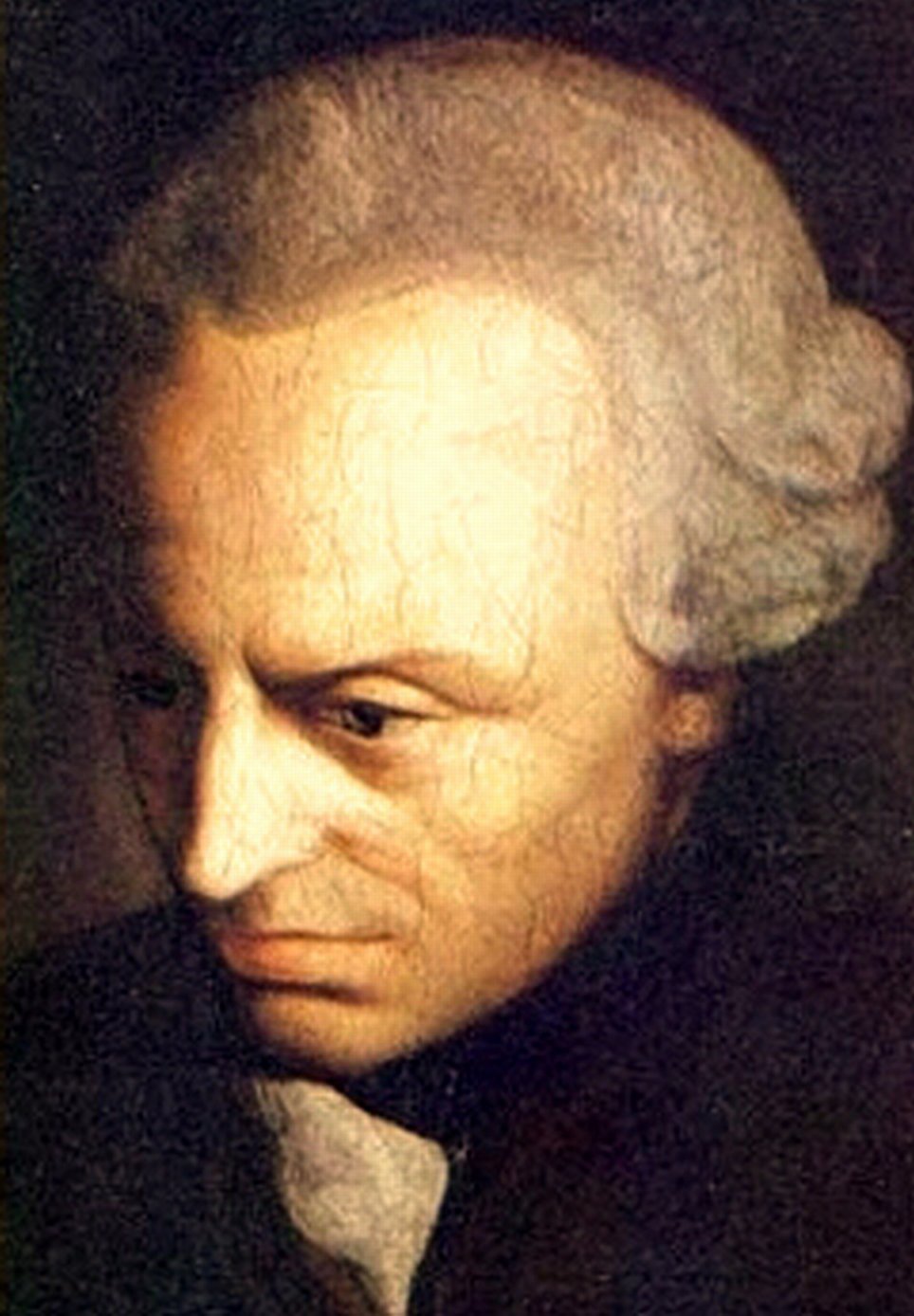
Portrait of Immanuel Kant. The German philosopher and writer of the Critique of Pure Reason, whose philosophy is under discussion.

Immanuel Kant

Another reddit user with an interest in Ayn Rand and Objectivism, /u/Abstract_Atheist, posted a “Quick and Easy Refutation of the Noumenal Realm” on reddit. (The “noumenal realm” is commonly described to be Immanuel Kant’s term for the universe “as it is in itself,” apart from human perception. According to Kant, the human apparatus of perception renders the “things-in-themselves” as “appearances,” or roughly synonymously, as “phenomena.”)

Abstract_Atheist’s supposed refutation was to say that, for example, the noumenal realm is either yellow or non-yellow. If it is yellow, then one of our concepts applies to it, (“yellow.”) If it is not yellow, then one of our concepts still applies to it, (“non-yellow.”) In either case, a human concept applies to it, thus (supposedly) negating the noumenal realm’s defining status as outside human cognition.

I, however, do not consider this a good refutation for a reason I outline below. In this, I loosely agree with a comment made by another user (/u/drunkentune.)

My own refutation of Kant’s distinction between “appearance” and “thing-in-itself,” along with my defense of it against /u/wokeupabug, is the subject of my comments below. (I am Sword_of_Apollo):

Sword_of_Apollo:

/u/drunkentune has a point. Non-axiomatic concepts are contextual and can’t generally be said to divide all of existence between themselves and their antitheses. I make this point in my discussion of fairness and justice.

I think the real quick and easy refutation of the “noumenal realm” is a statement of the axioms:

1. Existence exists.

2. An existent is itself.

3. Consciousness perceives existence.

This last axiom directly eliminates any distinction between a “noumenal” and “phenomenal” realm. I discussed this with /u/ReallyNicole in a thread, here.

Also, as a side-note, have you listened to or read Understanding Objectivism and/or Objectivism Through Induction?

Continue reading

What Squeegee Bandits Can Teach Us About the Welfare State (Voices for Reason)

Don Watkins makes an excellent and concise point about consent and moral responsibility in this blog post at Voices for Reason:

What Squeegee Bandits Can Teach Us About the Welfare State

Here’s a bonus video: “Is Inequality Fair?” by Yaron Brook of the Ayn Rand Institute:


—–

Related Posts:

America Before The Entitlement State

19th-Century Capitalism Didn’t Create Poverty, But Reduced It

How to Show That Taxation is Robbery

On Fairness and Justice: Their Meanings, Scopes, and How They Are Not the Same

The Nature of the Morality of Rational Egoism: Short Notes

A Dialogue on Metaethics, Moral Realism and Platonism from an Objectivist Perspective

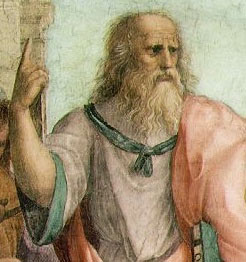
Plato points upward in Raphael's fresco, "The School of Athens." Plato was a Platonic "moral realist." He believed that a "Form of The Good" resided in extra-mental reality.

Plato in The School of Athens

What is the basis for an objective morality in under 1000 words? Where does mainstream Moral Realism go wrong? What error did Plato make that has negatively affected philosophers’ ethical assumptions even into the 21st Century? What is the meaning of modern, moral “error theory?”

If you are interested in any of these questions, I think you’ll want to see the answers given in the dialogue contained in this post.

First, a bit of context: I posted this article on the philosophy section of reddit: Answering Sam Harris’s “Moral Landscape Challenge”. The first comment below is responding to and quoting that posted article. I respond to that comment, and another poster responds to me, starting the dialogue. I am “Sword_of_Apollo” in this dialogue:

LaoTzusGymShoes:

Some of these facts may be apparent, animals certainly seem to prefer warm, comfy shelter and food to the cold, and starvation, but others seem to be fairly dramatic assertions, that would be much more convincing with argumentation.

For instance

“The basic problem with all variants of utilitarianism, including Harris’s, is that there is no reason to act for the well-being of other conscious creatures, apart from how doing so redounds on one’s own well-being.”

This is a bold assertion. I don’t see this as being obvious in the slightest. Indeed, I’d say there’s no reason to only value my own well-being, when I have every reason to believe that I’m the same sort of being as other humans*. If my well-being is important, then why shouldn’t their’s be as well?

*also, don’t animals deserve moral consideration, at least to some degree? I mean, you don’t have to be vegan or whatever, but kicking a puppy doesn’t really seem morally neutral.

Continue reading

Ontology and The Problem of Universals: An Objectivist Comments

shiny_red_applesAyn Rand is sometimes accused of misunderstanding the “Problem of Universals,” that philosophers such as Plato, Aristotle, Boethius and William of Ockham have dealt with for millennia.

The Problem of Universals consists of the question: To what do people refer when we use terms that can be applied to different particular things? For example the term “man” is applied not just to one entity, but to many entities that are each called a “man.” Another example is “spherical.” Many different things can be said to be “spherical.” An answer to the Problem of Universals will explain how this use of single terms for multiple different objects works.

In Introduction to Objectivist Epistemology, (ITOE) Rand claims to have solved the ancient Problem of Universals. She describes in detail the process by which man forms generally applicable concepts from his perceptions of particulars in reality. Critics sometimes charge that Rand is giving us an epistemological theory when a solution to the Problem of Universals calls for an ontological theory. (Ontology, properly conceived, is the branch of metaphysics that deals with the most fundamental classification of existents; it is the study of “what there is,” metaphysically.)

But considering the Problem of Universals purely ontological, and thus considering Rand’s theory of concept formation irrelevant to it, improperly privileges variants of “Realism” (about universals) by treating the rejection of such abstract objects as sufficient to define a single theory (variously referred to as “Nominalism” or “Anti-Realism.”) The rejection of universals in external reality does not specify a positive theory of what universals are and how they are related to external reality. Much more explanation is required to do this, as evidenced by the various subcategories of Nominalism/Anti-Realism. In ITOE, Ayn Rand presents an alternative theory on the level of the variants of Anti-Realism in the Internet Encyclopedia of Philosophy. (i.e. Predicate Nominalism, Resemblance Nominalism, Trope Nominalism and Conceptualism.)

Continue reading

Ayn Rand’s Philosophy vs. Abortion Bans: Why a Fetus Doesn’t Have Rights

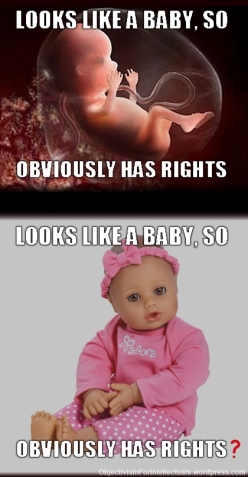
Fetal rights and abortion meme. A fetus and a doll both look like babies. Pro-choice is pro-life. Embryos don't have rights.

I hope none of my readers operate on this intellectual level when it comes to the issue of abortion and fetal rights.

[Note: I consider the basic ideas used in this essay to be Ayn Rand’s, but the content of the entire essay is mine. Also, a summary follows this essay.]

The author and philosopher of Objectivism, Ayn Rand, was a champion of capitalism and a staunch advocate for the principle of individual rights. Yet, unlike most of today’s conservatives and Tea Party supporters, Ayn Rand supported the right of a woman to abortion. (She was “pro-choice.”) This post will argue that Rand was right about abortion, and that any conservative who wants to be reasonable in his or her advocacy of human rights should advocate for the right to abort a pregnancy.

Should it be illegal to slaughter cattle for meat? Do the emotions of sympathy that some activists have for animals mean that cattle have rights, and thereby mean that killing cattle for food should be illegal? If someone shows you a picture of a freshly slaughtered cow, and you say “Oh, how awful,” does that mean the cow’s killer should be given a jail term?

No, sympathetic emotions and graphic pictures are not enough to establish that animals have rights, the violation of which should be punished by the government. So it is with human beings, fetuses, embryos and human kidneys. Our emotional reactions are not enough to establish that any of these entities has rights. We must look at what the entity is and identify facts about it to establish whether or not it has rights that should be protected by the government. If, instead of going through this process, I claimed that Zeus told me through my emotions that trees have a right to life, you would have good reason to say that I was being irrational.

If a doctor performs surgery on you, will he find a body part called a “right to life”? If someone analyzes your DNA, will he find a gene that encodes for human rights? Obviously not.

Does a right to life serve as a physical barrier to harm? If you tell a ravening tiger or a Nazi soldier that you have a right to life, will that stop him from killing you? No?

What about the Bible? Are rights violations the criteria by which Christ separates the righteous from the wicked? That’s not what I remember Jesus saying about salvation. What about the Old Testament? Do rights come from the Commandments? Well, the Israelites practice slavery and participate in a tremendous amount of non-defensive killing, with the Old-Testament God’s approval, after the Commandments are given. (See: Ex. 32:27-29, Lev. 24:10-23, 1 Sam. 15:2-11, Jos. 6:1-21.) Further, Yahweh’s laws for the Israelites violate the US Founding Fathers’ notion of individual rights in countless ways. (No freedom of religious speech; no right to a fair trial, etc.) In the New Testament, Jesus, Paul and Peter encourage followers not to defend their rights against others, or exercise their personal property rights. (See: Mt. 5:38-42, Mt. 16:23-25Mt. 19:21, Acts 2:42-451 Cor. 4:10-13, 1 Pet. 2:18-25.)

In fact, the “rights to life, liberty and the pursuit of happiness” on which the US was founded are not mentioned once in the entire Bible. What then are “rights” and where do they come from?

Continue reading

Yaron Brook Interview on The Heartland Institute Daily Podcast: The Philosophy of Liberty

What’s the difference between “equality,” as the US Founding Fathers meant it and “equality,” as those in today’s political Left mean it? The Founders created the freest and most prosperous nation on earth. Yet did you know that the Khmer Rouge of Cambodia were motivated by “equality” in the deliberate murder of millions of people?

In this interview with Jim Lakely of the Heartland Daily Podcast, Yaron Brook, president of the Ayn Rand Institute, discusses equality, morality and general philosophy, and their connection to liberty:

Here is Part 1.

I had some trouble with the player stopping in the middle. If anyone has this problem, the direct link to the file is here:

http://heartland.org/sites/default/files/yaronbrook-part1.mp3

Here is Part 2.

And the direct link to the file:

http://heartland.org/sites/default/files/fire-yaronbrook-part2.mp3

If you found the interview enlightening or persuasive, please share this post with as many people as you can. Yaron Brook has a very important message, and is an excellent speaker. Here is a particularly good example of his many lectures:

Finally, I recommend the book Yaron Brook coauthored with Don Watkins: Free Market Revolution: How Ayn Rand’s Ideas Can End Big Government

—–

Related Posts:

How to Show That Taxation is Robbery

Wealth is Created by Action Based on Rational Thought

Why Healthcare in the US is So Expensive, and What Can Be Done About It

The Nature of the Morality of Rational Egoism: Short Notes

An Objectivist Refutation of Anarcho-Capitalism (Market Anarchy)