A Critique of Kant on the Noumenal World / Phenomenal World Distinction (“Thing-in-Itself” vs “Appearance”)

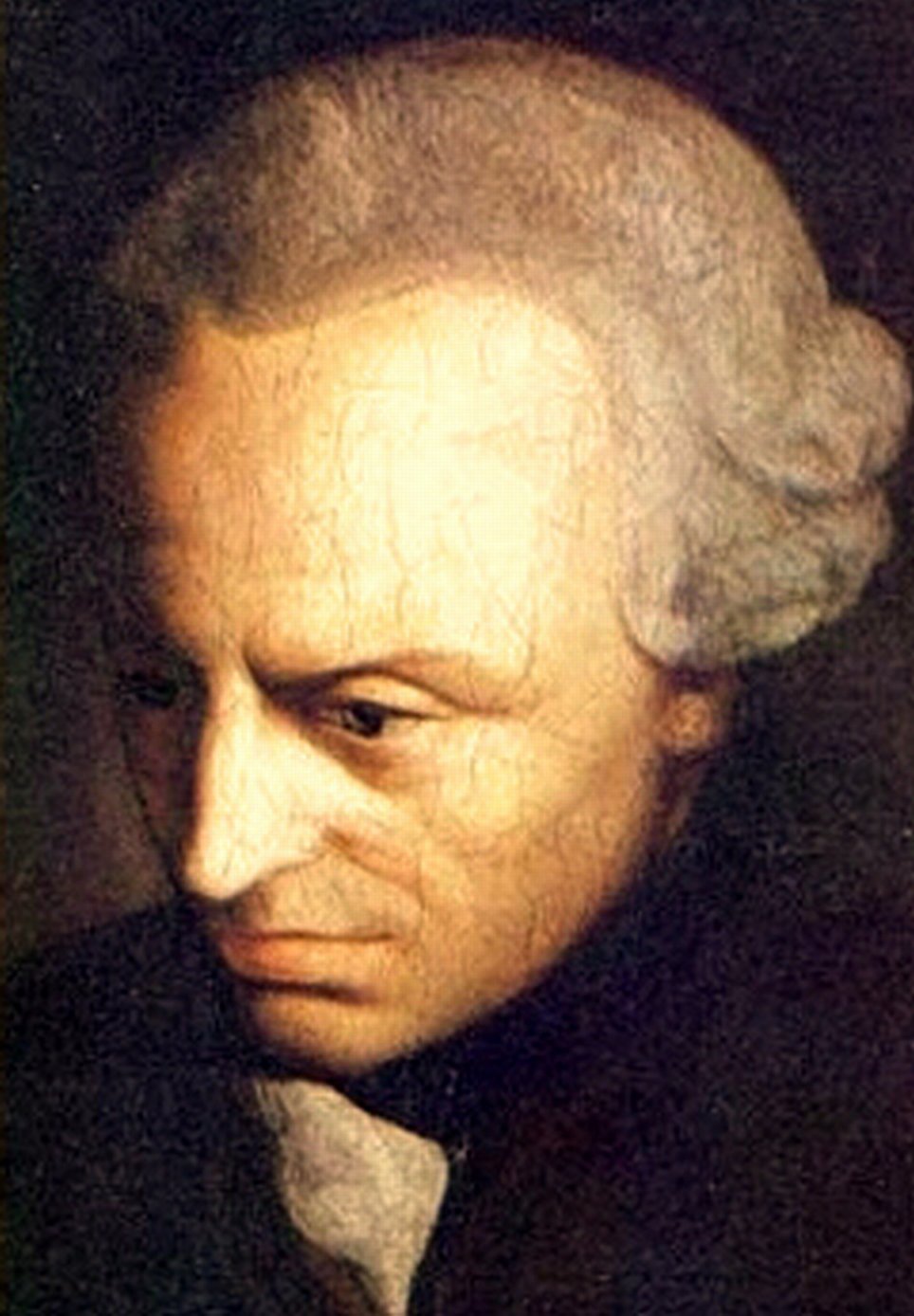
Portrait of Immanuel Kant. The German philosopher and writer of the Critique of Pure Reason, whose philosophy is under discussion.

Immanuel Kant

Another reddit user with an interest in Ayn Rand and Objectivism, /u/Abstract_Atheist, posted a “Quick and Easy Refutation of the Noumenal Realm” on reddit. (The “noumenal realm” is commonly described to be Immanuel Kant’s term for the universe “as it is in itself,” apart from human perception. According to Kant, the human apparatus of perception renders the “things-in-themselves” as “appearances,” or roughly synonymously, as “phenomena.”)

Abstract_Atheist’s supposed refutation was to say that, for example, the noumenal realm is either yellow or non-yellow. If it is yellow, then one of our concepts applies to it, (“yellow.”) If it is not yellow, then one of our concepts still applies to it, (“non-yellow.”) In either case, a human concept applies to it, thus (supposedly) negating the noumenal realm’s defining status as outside human cognition.

I, however, do not consider this a good refutation for a reason I outline below. In this, I loosely agree with a comment made by another user (/u/drunkentune.)

My own refutation of Kant’s distinction between “appearance” and “thing-in-itself,” along with my defense of it against /u/wokeupabug, is the subject of my comments below. (I am Sword_of_Apollo):

Sword_of_Apollo:

/u/drunkentune has a point. Non-axiomatic concepts are contextual and can’t generally be said to divide all of existence between themselves and their antitheses. I make this point in my discussion of fairness and justice.

I think the real quick and easy refutation of the “noumenal realm” is a statement of the axioms:

1. Existence exists.

2. An existent is itself.

3. Consciousness perceives existence.

This last axiom directly eliminates any distinction between a “noumenal” and “phenomenal” realm. I discussed this with /u/ReallyNicole in a thread, here.

Also, as a side-note, have you listened to or read Understanding Objectivism and/or Objectivism Through Induction?

Continue reading

What Squeegee Bandits Can Teach Us About the Welfare State (Voices for Reason)

Don Watkins makes an excellent and concise point about consent and moral responsibility in this blog post at Voices for Reason:

What Squeegee Bandits Can Teach Us About the Welfare State

Here’s a bonus video: “Is Inequality Fair?” by Yaron Brook of the Ayn Rand Institute:


—–

Related Posts:

America Before The Entitlement State

19th-Century Capitalism Didn’t Create Poverty, But Reduced It

How to Show That Taxation is Robbery

On Fairness and Justice: Their Meanings, Scopes, and How They Are Not the Same

The Nature of the Morality of Rational Egoism: Short Notes

A Dialogue on Metaethics, Moral Realism and Platonism from an Objectivist Perspective

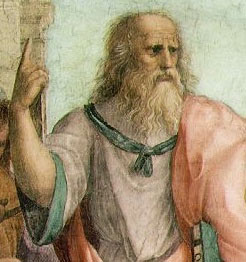
Plato points upward in Raphael's fresco, "The School of Athens." Plato was a Platonic "moral realist." He believed that a "Form of The Good" resided in extra-mental reality.

Plato in The School of Athens

What is the basis for an objective morality in under 1000 words? Where does mainstream Moral Realism go wrong? What error did Plato make that has negatively affected philosophers’ ethical assumptions even into the 21st Century? What is the meaning of modern, moral “error theory?”

If you are interested in any of these questions, I think you’ll want to see the answers given in the dialogue contained in this post.

First, a bit of context: I posted this article on the philosophy section of reddit: Answering Sam Harris’s “Moral Landscape Challenge”. The first comment below is responding to and quoting that posted article. I respond to that comment, and another poster responds to me, starting the dialogue. I am “Sword_of_Apollo” in this dialogue:

LaoTzusGymShoes:

Some of these facts may be apparent, animals certainly seem to prefer warm, comfy shelter and food to the cold, and starvation, but others seem to be fairly dramatic assertions, that would be much more convincing with argumentation.

For instance

“The basic problem with all variants of utilitarianism, including Harris’s, is that there is no reason to act for the well-being of other conscious creatures, apart from how doing so redounds on one’s own well-being.”

This is a bold assertion. I don’t see this as being obvious in the slightest. Indeed, I’d say there’s no reason to only value my own well-being, when I have every reason to believe that I’m the same sort of being as other humans*. If my well-being is important, then why shouldn’t their’s be as well?

*also, don’t animals deserve moral consideration, at least to some degree? I mean, you don’t have to be vegan or whatever, but kicking a puppy doesn’t really seem morally neutral.

Continue reading

Ontology and The Problem of Universals: An Objectivist Comments

shiny_red_applesAyn Rand is sometimes accused of misunderstanding the “Problem of Universals,” that philosophers such as Plato, Aristotle, Boethius and William of Ockham have dealt with for millennia.

The Problem of Universals consists of the question: To what do people refer when we use terms that can be applied to different particular things? For example the term “man” is applied not just to one entity, but to many entities that are each called a “man.” Another example is “spherical.” Many different things can be said to be “spherical.” An answer to the Problem of Universals will explain how this use of single terms for multiple different objects works.

In Introduction to Objectivist Epistemology, (ITOE) Rand claims to have solved the ancient Problem of Universals. She describes in detail the process by which man forms generally applicable concepts from his perceptions of particulars in reality. Critics sometimes charge that Rand is giving us an epistemological theory when a solution to the Problem of Universals calls for an ontological theory. (Ontology, properly conceived, is the branch of metaphysics that deals with the most fundamental classification of existents; it is the study of “what there is,” metaphysically.)

But considering the Problem of Universals purely ontological, and thus considering Rand’s theory of concept formation irrelevant to it, improperly privileges variants of “Realism” (about universals) by treating the rejection of such abstract objects as sufficient to define a single theory (variously referred to as “Nominalism” or “Anti-Realism.”) The rejection of universals in external reality does not specify a positive theory of what universals are and how they are related to external reality. Much more explanation is required to do this, as evidenced by the various subcategories of Nominalism/Anti-Realism. In ITOE, Ayn Rand presents an alternative theory on the level of the variants of Anti-Realism in the Internet Encyclopedia of Philosophy. (i.e. Predicate Nominalism, Resemblance Nominalism, Trope Nominalism and Conceptualism.)

Continue reading

Ayn Rand’s Philosophy vs. Abortion Bans: Why a Fetus Doesn’t Have Rights

Fetal rights and abortion meme. A fetus and a doll both look like babies. Pro-choice is pro-life. Embryos don't have rights.

I hope none of my readers operate on this intellectual level when it comes to the issue of abortion and fetal rights.

[Note: I consider the basic ideas used in this essay to be Ayn Rand’s, but the content of the entire essay is mine. Also, a summary follows this essay.]

The author and philosopher of Objectivism, Ayn Rand, was a champion of capitalism and a staunch advocate for the principle of individual rights. Yet, unlike most of today’s conservatives and Tea Party supporters, Ayn Rand supported the right of a woman to abortion. (She was “pro-choice.”) This post will argue that Rand was right about abortion, and that any conservative who wants to be reasonable in his or her advocacy of human rights should advocate for the right to abort a pregnancy.

Should it be illegal to slaughter cattle for meat? Do the emotions of sympathy that some activists have for animals mean that cattle have rights, and thereby mean that killing cattle for food should be illegal? If someone shows you a picture of a freshly slaughtered cow, and you say “Oh, how awful,” does that mean the cow’s killer should be given a jail term?

No, sympathetic emotions and graphic pictures are not enough to establish that animals have rights, the violation of which should be punished by the government. So it is with human beings, fetuses, embryos and human kidneys. Our emotional reactions are not enough to establish that any of these entities has rights. We must look at what the entity is and identify facts about it to establish whether or not it has rights that should be protected by the government. If, instead of going through this process, I claimed that Zeus told me through my emotions that trees have a right to life, you would have good reason to say that I was being irrational.

If a doctor performs surgery on you, will he find a body part called a “right to life”? If someone analyzes your DNA, will he find a gene that encodes for human rights? Obviously not.

Does a right to life serve as a physical barrier to harm? If you tell a ravening tiger or a Nazi soldier that you have a right to life, will that stop him from killing you? No?

What about the Bible? Are rights violations the criteria by which Christ separates the righteous from the wicked? That’s not what I remember Jesus saying about salvation. What about the Old Testament? Do rights come from the Commandments? Well, the Israelites practice slavery and participate in a tremendous amount of non-defensive killing, with the Old-Testament God’s approval, after the Commandments are given. (See: Ex. 32:27-29, Lev. 24:10-23, 1 Sam. 15:2-11, Jos. 6:1-21.) Further, Yahweh’s laws for the Israelites violate the US Founding Fathers’ notion of individual rights in countless ways. (No freedom of religious speech; no right to a fair trial, etc.) In the New Testament, Jesus, Paul and Peter encourage followers not to defend their rights against others, or exercise their personal property rights. (See: Mt. 5:38-42, Mt. 16:23-25Mt. 19:21, Acts 2:42-451 Cor. 4:10-13, 1 Pet. 2:18-25.)

In fact, the “rights to life, liberty and the pursuit of happiness” on which the US was founded are not mentioned once in the entire Bible. What then are “rights” and where do they come from?

Continue reading

Student suspended for questioning CT Governor on Gun Legislation

First, government officials come after your Second Amendment rights. Then, when you peacefully question them about it and tell them that they’re destroying your business, government officials violate your First Amendment rights to shut you up! (Note that Asnuntuck Community College is a public/government institution.) All hail the coming police state!

justturnright's avatarTwo Heads are Better Than One


Shut up

If you’re one of the many folks upset about Connecticut’s new gun laws, that state’s governor has a message for you: Shut Up.

Courtesy of the Daily Caller:

“…student Nicholas Saucier tried to get (Democratic Governor Dannel ) Malloy to answer questions about his support for gun control legislation, which has put Saucier’s ammunition manufacturing business in jeopardy. Saucier followed Malloy to his car after the governor finished speaking at a public forum at Asnuntuck Community College.

The exchange took place in October of last year, and was captured on video…” 

Sounds relatively harmless so far, right?

Now here’s the video:

View original post 563 more words

Yaron Brook Interview on The Heartland Institute Daily Podcast: The Philosophy of Liberty

What’s the difference between “equality,” as the US Founding Fathers meant it and “equality,” as those in today’s political Left mean it? The Founders created the freest and most prosperous nation on earth. Yet did you know that the Khmer Rouge of Cambodia were motivated by “equality” in the deliberate murder of millions of people?

In this interview with Jim Lakely of the Heartland Daily Podcast, Yaron Brook, president of the Ayn Rand Institute, discusses equality, morality and general philosophy, and their connection to liberty:

Here is Part 1.

I had some trouble with the player stopping in the middle. If anyone has this problem, the direct link to the file is here:

http://heartland.org/sites/default/files/yaronbrook-part1.mp3

Here is Part 2.

And the direct link to the file:

http://heartland.org/sites/default/files/fire-yaronbrook-part2.mp3

If you found the interview enlightening or persuasive, please share this post with as many people as you can. Yaron Brook has a very important message, and is an excellent speaker. Here is a particularly good example of his many lectures:

Finally, I recommend the book Yaron Brook coauthored with Don Watkins: Free Market Revolution: How Ayn Rand’s Ideas Can End Big Government

—–

Related Posts:

How to Show That Taxation is Robbery

Wealth is Created by Action Based on Rational Thought

Why Healthcare in the US is So Expensive, and What Can Be Done About It

The Nature of the Morality of Rational Egoism: Short Notes

An Objectivist Refutation of Anarcho-Capitalism (Market Anarchy)

QuickPoint 6: Psychological Egoism is False — Not Everyone is Selfish

The Virtue of SelfishnessAyn Rand properly recognized that people do not necessarily act in their own self-interest. There is a difference between having a psychological motive to act in a certain way and a self-interested reason to act in a certain way.

Having a psychological motive can simply mean having a subjective whim, and an action taken on this basis can be very damaging to oneself (and so, not self-interested.) There is also self-sacrifice out of a desire to “be good,” i.e. to follow the duties of an irrational morality.

(Imagine a young woman who has the passion and ability to become a great artist. She wants to become an artist, has ideas for great paintings, and being an artist would be her means to a happy, flourishing life. But she accepts the morality of altruism, and she is convinced that, rather than going to a top art school, it is her duty as a “privileged American” to devote her life to saving Third-World children. This is not self-interested, just because she wants to save Third-World children out of a sense of moral duty. Nor is it self-interested just because she may get some pleasure out of “being moral”–at first.)

Given one’s basic nature, situation, experiences, abilities and psychological makeup, one’s own self-interest is objective, not a matter of one’s momentary whims. Any pleasures one pursues must be consistent with one’s overall, long-term well-being–both physical and mental–to be moral.

Those who refuse to think and continually subvert their own minds are not selfish. They need their minds–their ability to reason–to achieve any positive thing they value. What can they achieve without reason? In principle, only their own destruction, and, to the extent they use force, that of others.

—–

Related Posts:

Atlas Shrugged, Altruism and Egoism

Why a Proper Ethics is Not a Set of Social Rules, But a Complete Way of Life

Values Are Relational But Not Subjective

QuickPoint 1: Thinking is Individual

Human Emotions are the Products of Beliefs and Subconscious Value Judgments

Capitalism: Individual Rights vs. “The Common Good” — Full Version

Note: This is an expanded version of my entry for the “What is Capitalism?” essay contest on Ayn Rand Institute Campus. The essay prompt was: “Why does Ayn Rand argue that the moral justification of capitalism does not lie in the claim that it is the best way to achieve the ‘common good’?” The maximum length for the essay was a mere 800 words, so I had to heavily edit my original draft for submission, (already brief at just over 1,000 words.) Here, I’m able post the essay without that length constraint. For the 799-word version, click here.

adamsmith

Adam Smith

Ever since the Enlightenment, there have been many attempts to justify capitalism–or a quasi-capitalist mixed economy—on the basis of its being the best way to achieve “the common good,” or “the public good.” For example, Adam Smith wrote that “By pursuing his own interest [a man] frequently promotes that of the society more effectually than when he really intends to promote it. I have never known much good done by those who affected to trade for the public good.” Thus he implied that the public good is a valid concept and consideration. (1) According to the Internet Encyclopedia of Philosophy, Jeremy Bentham thought that “[Rights] ought to be made because of their conduciveness to ‘the general mass of felicity,’ and correlatively, when their abolition would be to the advantage of society, rights ought to be abolished.”

More common among modern conservatives and the moderate left, is the statement that regulated quasi-capitalism is “practical.” This statement is generally made without answers to the question: Practical for whom and to what end? The implied answer seems to be: For everyone and to any end. So this claim of practicality can be taken as an implied appeal to “the common good” as justification.

Ayn Rand

Ayn Rand

But Ayn Rand justified pure, laissez-faire capitalism on different grounds. She rejected “the common good” as an invalid, collectivist notion, and instead held that capitalism rests upon the principle of individual rights. This principle, in turn, rests upon the morality of rational egoism, which rests on the nature of man. Thus, the justification for capitalism as the proper governmental system for man starts with the nature of man as a living organism.

Continue reading

Capitalism: Individual Rights vs. “The Common Good” — Short Version

Note: This is my entry for the “What is Capitalism?” essay contest on Ayn Rand Institute Campus. The essay prompt was: “Why does Ayn Rand argue that the moral justification of capitalism does not lie in the claim that it is the best way to achieve the ‘common good’?” The maximum length for the essay was a mere 800 words, so I had to heavily edit my original draft (already brief at just over 1,000 words.) For the longer version, without the heavy editing, click here.

Ever since the Enlightenment, there have been many attempts to justify capitalism–or rather, a quasi-capitalist mixed economy—on the basis of its being the best way to achieve “the common good.”

But Ayn Rand justified capitalism on different grounds. She rejected “the common good” as an invalid, collectivist notion, and instead held that capitalism rests upon the principle of individual rights. This principle ultimately rests on the nature of man. Thus, the justification for capitalism as the proper governmental system for man starts with the nature of man as a living organism.

Living organisms must support their own lives by their own actions. Whether plant or animal, microbe or man. It is this self-sustaining, self-generated action of life that gives rise to values: the things that living organisms pursue to keep themselves alive. It is only in reference to the maintenance of an organism’s life, as the ultimate basis, that anything can be evaluated.

Thus, it is only in reference to the maintenance of human life that a human governmental system can ultimately be evaluated. But in order to evaluate the effectiveness of any governmental system in the promotion of human life, we need to know the fundamental means by which man survives.

Man’s mind, unlike other animals, operates conceptually and non-automatically. He has no instincts to guide him throughout his life.

Man cannot survive by simply adapting himself to his environment, but must adapt his environment to himself. He lacks the physical prowess of the other animals, but he can use his mind to make tools, shelter, clothing, to grow food and domesticate animals.
Man’s mind—his process of thinking—is his basic means of survival, and it must be performed independently by individuals.

So the fundamental unit of human life is the individual. If human beings are to live, rather than die—to flourish, rather than stagnate—they need to use their own minds to support their own lives.

In order to do this, they need to be free from the initiation of physical compulsion by others. Among chosen human actions, it is only physical force that can stop, paralyze, or nullify the thought of an individual. A man’s thought (and life) is stopped if he is killed; his thought is stopped if his brain is destroyed by a club; his thought is paralyzed if the government prohibits his ideas from being expressed; his thought is nullified to the extent that he is prevented from acting on his own judgment.

The principle required to objectively implement the non-initiation of force in a societal context is the principle of individual rights. A right is, in Ayn Rand’s words, “a moral principle defining and sanctioning a man’s freedom of action in a social context.” It is the rights to life, liberty and property that enable man to thrive in a society. This is because the enforcement of these rights protects man’s freedom of judgment and action in the pursuit of his own life. The protection of rights ensures that man has the free use of the fundamental tools of survival and happiness: his mind, his body and his property.
Under capitalism, the government only has three basic functions: to provide the police, the military and the courts. The only laws that the government enforces are those that help protect individual rights. The government does not provide welfare, health insurance, or retirement payments. Nor does it regulate business activity, (beyond protecting rights, prosecuting fraud and enforcing contracts.) Nor does it regulate interest rates, enforce an official currency, regulate rents.

Capitalism is a system designed to let those who produce valuable things benefit from their own production. They are as free to benefit from their own productivity as they would be on a large island by themselves. Capitalism is not designed to let some people force others to pay for their lifestyle. Capitalism, just like a deserted island, is not good for people who are determined to leech off of others, when they could be productive.

If the woozy notion of “the common good” is translated into “the good of everyone in the country, irrespective of his goals,” then capitalism does not promote the common good. It enables those whose goal is the maintenance and betterment of their own lives, to actually sustain and improve their own lives. In this process, capitalism enables people who are willing, to donate to charities for those who are genuinely unable to sustain themselves. The abundance of created wealth allows for larger donations, without self-sacrifice on the part of the donors.

Thus, capitalism, by enshrining and protecting individual rights, would provide great potential benefits to mankind. But it is only the portion of mankind that is (or would be) willing to use their minds and produce values that would actually benefit from the system.

—–

Related Posts:

How to Show That Taxation is Robbery

Wealth is Created by Action Based on Rational Thought

QuickPoint 1: Thinking is Individual

Why Healthcare in the US is So Expensive, and What Can Be Done About It

An Objectivist Refutation of Anarcho-Capitalism (Market Anarchy)