Unknown's avatar

About Sword of Apollo

The dollar sign represents the creation of value, whether material or spiritual (i.e. psychological.) The creation of value by action *based on thought* is what sustains human life. Thus, the dollar sign is the proper symbol of human life. If you look closely, you'll see I have modified the dollar sign slightly for my personal Gravatar.

Linktoberfest: Self-Interest, Healthcare and the Environmental Benefits of Fossil Fuels

I had an enjoyable and productive discussion with a lovely young woman on her blog. Theresa Fross just turned 18, and I can tell that she’s open to new ideas. She’s clearly intelligent and thoughtful, and we discussed Ayn Rand’s novels, the nature of life, values, self-interest, Christianity, and Buddhism. The discussion starts midway down the comments section, then, at one point, continues above my first post:

My discussion with Theresa Fross

Yaron Brook, president of the Ayn Rand Institute, discusses the immorality of the government forcing people to pay for the health care of others:

You Are Not Your Neighbor’s Health Care Provider

Alex Epstein, president of the Center for Industrial Progress, gives a lecture at Vassar College on how Fossil Fuels Improve the Planet. Right now, it is only fossil fuels that make the current human population of the earth sustainable. His talk was momentarily disrupted by environmentalist protesters:

Everyone who agrees that liberty is a good thing should read this book:

Free Market Revolution: How Ayn Rand’s Ideas Can End Big Government by Yaron Brook and Don Watkins

I especially recommend it for those who are sympathetic to the Tea Party Patriots.

—–

Related Posts:

The Nature of the Morality of Rational Egoism: Short Notes

Why Healthcare in the US is So Expensive, and What Can Be Done About It

Atlas Shrugged, Altruism and Egoism

What Caused the Financial Crisis: It Wasn’t Capitalism or Deregulation

Fossil Fuels and Environment: McKibben vs. Epstein, Full Debate
QuickPoint 5: Any Claim to a Probability is Also a Claim to a Certainty

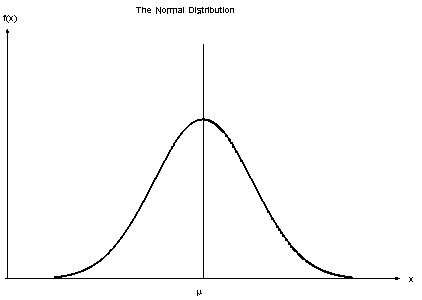
Are you saying you're certain that that's the probability distribution?

Are you saying you’re certain that that’s the probability distribution?

Whenever anyone says that some statement’s truth is probable, whether they give a numerical percentage or not, they are making a definite knowledge claim: that the statement’s truth is probable. Whether the probability is measured by a percentage, or relative to some other statement(s), the person is claiming that that is the probability’s measure.

In other words, the person claiming a probability is claiming a certainty about the probability, itself.

If such a person claims that his estimate of the probability is based on another probability, then the question becomes, “What is the prior probability based on?” The failure to provide at least one certainty at the foundation of one’s estimate of such probabilities leads to an infinite regress, or to a baseless circle–neither of which is rationally tenable.

Thus, for any claim of probability to be based in reason, it must be founded on at least one absolute certainty. And so a claim about the probability of any statement’s truth implies at least one claim to certain knowledge.

—–

Related Posts:

Taking Philosophy Seriously…

Objectivism vs. Intrinsicism vs. Subjectivism: A Short Summary

The Arbitrary (from The Objectivism Seminar)

The Bible (New Testament) as Evidence

Proceeding from Axioms in Objectivism – YouTube Edition

QuickPoint 4: It Is Not Racist to Judge One Culture Superior to Another

A culture is a set of ideas and practices that constitute a general way of thinking about the world and a typical way of life. Ideas can be correct or incorrect. Practices based on those ideas can be conducive to human life, or destructive of it. In short, ideas and practices can be objectively good or bad for people.

The judgment of certain cultures (ideas and practices) as better than other cultures is entirely separate from the phenomenon of racism. Racism, broadly, is the idea that one’s race, genetics, or ancestry is a determining factor in the content of his or her consciousness. Consequently, it is the idea that one can determine something about what someone believes by studying his genetic or ancestral lineage. This often takes the form of moral value judgments based on race or ethnicity.

There are some cultures that have historically been associated with large numbers of people in certain genetic groups, such as “Jewish culture” and “American Black culture.” But there is no necessary connection between genetics and culture. Anyone can be a part of any culture, according to his education and personal choices. Thus, a judgment of “American Black culture” as inferior to “Chinese-American culture” is not a judgment of an African lineage as inferior to a Chinese lineage. It is simply an acknowledgment of the fact that the cultural ideas and practices that have traditionally been accepted by large numbers of African-Americans are less conducive to human well-being than those that have traditionally been accepted by large numbers of Chinese-Americans. (It is this difference that is reflected in vastly different crime rates between the two groups.)

The irony here is that it is actually racist to consider a person’s culture to be determined by his genetics. Thus, it is actually racist to consider the evaluative ranking of cultures “racist.”

—–

Related Posts:

The Nature of the Morality of Rational Egoism: Short Notes

Values Are Relational But Not Subjective

Why Morality is Not “Evolved,” But Defined and Chosen

Why a Proper Ethics is Not a Set of Social Rules, But a Complete Way of Life

Atlas Shrugged, Altruism and Egoism

Why Healthcare in the US is So Expensive, and What Can Be Done About It

Healthcare_s640x427The passage of ObamaCare, and the ongoing debate over it, is the culmination of over 80 years of ever-increasing government involvement in the healthcare industry. It is also the culmination of about 50 years of obviously increasing healthcare costs.

The following is a copy of an email that I sent to talk-show host, Bill Handel, on KFI AM 640 radio in the Los Angeles area:

Dear Bill,

You have observed the indisputably bad state of American healthcare, with its poor performance and high, constantly rising costs, and concluded that the USA would be better off embracing a socialized healthcare system more like that of France. You have implied that these are our only two options. But I am sending you this email to let you know that there is a third alternative; one that is vastly superior to the two that you have considered.

The healthcare system in the US, today, is NOT anywhere near a free market. Over the past 80 years, the Federal and state governments have interfered/regulated, (used government compulsion) in the healthcare industry at an ever-increasing scale. In the 1930s and -40s, the Federal government decided to exempt group and employer-provided health care plans from taxation, thus creating a tax incentive for such plans. Over time, with the help of government acts, laws, and union collective bargaining, these plans developed into the type of plans we have today. What we have today, with the support of government, are healthcare plans that act somewhat like insurance, except that this “insurance” is used for just about every common illness, injury, or other health issue. This system of “everyday insurance” insulates the patient from the cost of the treatments he receives. The patient no longer has to make a cost/benefit analysis for treatments, nor be concerned with getting the most value for his money. He simply pays his premium, then gets the most out of the coverage he can. At best, the price/service competition among doctors that keeps their prices in check, is shifted from appealing to patients to appealing to health plan providers. The patient, instead of having hundreds of doctors competing for his continued business each visit, has a few health plan providers competing for his long-term allegiance. It is much more of a hassle to switch health plan providers than to switch doctors, so competition is limited. Continue reading

Wealth is Created by Action Based on Rational Thought

One little bit of high-tech wealth brought to you by a lot of human thought.

One little bit of high-tech wealth brought to you by a lot of human thought.

Wealth consists of the life-promoting goods and services that people have access to. Wealth, (beyond fruit) does not grow on trees. Luxury homes do not spring up from the earth by themselves. Seasoned pork roasts do not fall from the sky. Wealth must be created by human activity.

But what kind of human activity generates wealth? Is it desiring? Does simply wanting a new car make it appear? Despite what most Keynesians will tell you, I’m afraid that it will not. (1) People have to act to create wealth. But what kind of action? If you flail your arms about mindlessly, will that create wealth? Obviously not. What is needed is action based on rational thought: That is, taking stock of one’s surroundings and the actual needs of oneself and/or others, then figuring out how to use one’s surroundings to create what is needed for the promotion of such human life, (i.e. wealth.)

To provide food, people need to think about how to plant and harvest, how to hunt, how to maintain livestock, how to store crop yields without spoilage, how to keep and prepare meat safely, etc. If no one thinks at all, everyone starves. But is all that’s required to reach today’s level of wealth, minimal, routine, low-level thought? Continue reading

Wealth is Not Money — Monetary Wages vs. Real Wages

MoneyStack-small

Not wealth.

There are many confusions that many people hold about economics today. One fairly common one that I’d like to address is the confusion of wealth with money.

Wealth consists of the actual goods and services that are available to a person. Food, medicine, clothing, houses, televisions, computers, jewelry, the services of a doctor–all of this is wealth.

Money, on the other hand, is the medium of exchange used to indirectly barter wealth. Unlike wealth, having money does you no good by yourself on an island. If the money supply in an economy is doubled, this does not increase the amount of wealth in that economy. What increases wealth in an economy is the production of material goods and the offering of valuable services.

The confusion between money and wealth tends to arise because, on an individual level with a given money supply, the way one gets access to more wealth is to get more money. But the way money translates into wealth is not a simple “more nominal money equals more wealth,” but “having a greater percentage of the money in the economy entitles one to a greater percentage of the wealth in that economy that one doesn’t already own.” Money is a claim to the wealth produced by others, (who are willing to sell) relative to the total money supply and the total wealth.

Money--Wealth Ratio

When people create wealth by producing valuable goods from raw materials or using skills to offer services, then trade these for money, they give value to the money in circulation. If they are able to produce wealth (of a type that’s needed/desired) faster than it’s consumed, they increase the value of the money in circulation. Since there are more goods and services chasing the same amount of money (assuming no more money is printed/created) the prices of the goods and services decrease. Continue reading

The Formal Refutation of Determinism and The Validation of Free Will (Libertarian Volition)

fork-in-the-road

Determinism is the doctrine that all events, including human choices, are the necessary results of prior events, and that no human decision could have been different than it was.

Objectivism holds that determinism, specifically with respect to human conceptual consciousness, is self-refuting, because it makes conceptual knowledge of any kind impossible. Since this includes the premise of determinism itself, such determinism is incoherent. This self-refutation of determinism extends not only to so-called “hard determinism,” but to compatibilism, as well. In fact, it extends to any theory that does not recognize a fundamental choice made by the individual that determines conceptual beliefs.

(The only way to self-consistently hold determinism is to hold that conceptual beliefs are completely infallible, and that there is no such thing as a false belief. And then there would be no need to argue for determinism or even to assert it: everyone would agree on every issue with which they had experience.)

Thus, a libertarian theory of free will is the only type that is tenable. The rest of this post will explain how and why this is so. First, for intuitive simplicity, I will make use of a very apt analogy for human minds, beliefs, and truth. Then I will present a formal reductio ad absurdum of physical-mental determinism in both an unabbreviated and an abbreviated form. Then I will briefly describe the Objectivist theory of free will (volition) and its consistency with the Objectivist view of causality and the laws of physics. Continue reading

A Facebook Debate on the Right to Abortion

The following exchange is taken from the comments on a post on the Objectivism for Intellectuals Facebook page. Rather than using the name of my interlocutor here, I will refer to her as “Her.” Irrelevant portions of the debate have been omitted.

Her:  So, being against abortion is irrational? I had no idea murder was a faith-only immorality.

Me:  It’s not murder if an embryo or fetus doesn’t have rights as an actual, independent human being. The religious “basis” for considering embryos to have rights is that they have already received a “soul.” This “soul” is a mystical construct with no basis in reality. There is no rational basis for a soul that can be separated from a developed and functioning brain. The mother is an actual, independent human with rights. The embryo is not.  Continue reading

QuickPoint 3: The Basis of Ayn Rand’s Ethics in a Nutshell

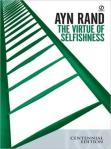
The Virtue of SelfishnessI observe long-term survival that I may objectively define human flourishing,* and the means to it. I aim at my objective flourishing that I may achieve happiness.

*Flourishing” is fulfilling one’s natural goal as well as possible. For living organisms, this means fulfilling an ideal pattern or mode of life as the type of organism each is. For man, this means choosing to make maximal use of his basic, distinctive means of survival–his conceptual faculty. Rand identifies this as the “survival of man qua man.”]

This is, in my understanding, the most basic summary of Rand’s program in “The Objectivist Ethics,” an essay within The Virtue of Selfishness. I think that keeping these two sentences in mind while reading the essay will help many people understand Rand’s points more fully.

—–

Related Posts:

The Nature of the Morality of Rational Egoism: Short Notes

Values Are Relational But Not Subjective

Why Each Person Can Have Only One Ultimate Value

Why a Proper Ethics is Not a Set of Social Rules, But a Complete Way of Life

Atlas Shrugged, Altruism and Egoism