QuickPoint 6: Psychological Egoism is False — Not Everyone is Selfish

The Virtue of SelfishnessAyn Rand properly recognized that people do not necessarily act in their own self-interest. There is a difference between having a psychological motive to act in a certain way and a self-interested reason to act in a certain way.

Having a psychological motive can simply mean having a subjective whim, and an action taken on this basis can be very damaging to oneself (and so, not self-interested.) There is also self-sacrifice out of a desire to “be good,” i.e. to follow the duties of an irrational morality.

(Imagine a young woman who has the passion and ability to become a great artist. She wants to become an artist, has ideas for great paintings, and being an artist would be her means to a happy, flourishing life. But she accepts the morality of altruism, and she is convinced that, rather than going to a top art school, it is her duty as a “privileged American” to devote her life to saving Third-World children. This is not self-interested, just because she wants to save Third-World children out of a sense of moral duty. Nor is it self-interested just because she may get some pleasure out of “being moral”–at first.)

Given one’s basic nature, situation, experiences, abilities and psychological makeup, one’s own self-interest is objective, not a matter of one’s momentary whims. Any pleasures one pursues must be consistent with one’s overall, long-term well-being–both physical and mental–to be moral.

Those who refuse to think and continually subvert their own minds are not selfish. They need their minds–their ability to reason–to achieve any positive thing they value. What can they achieve without reason? In principle, only their own destruction, and, to the extent they use force, that of others.

—–

Related Posts:

Atlas Shrugged, Altruism and Egoism

Why a Proper Ethics is Not a Set of Social Rules, But a Complete Way of Life

Values Are Relational But Not Subjective

QuickPoint 1: Thinking is Individual

Human Emotions are the Products of Beliefs and Subconscious Value Judgments

Capitalism: Individual Rights vs. “The Common Good” — Full Version

Note: This is an expanded version of my entry for the “What is Capitalism?” essay contest on Ayn Rand Institute Campus. The essay prompt was: “Why does Ayn Rand argue that the moral justification of capitalism does not lie in the claim that it is the best way to achieve the ‘common good’?” The maximum length for the essay was a mere 800 words, so I had to heavily edit my original draft for submission, (already brief at just over 1,000 words.) Here, I’m able post the essay without that length constraint. For the 799-word version, click here.

adamsmith

Adam Smith

Ever since the Enlightenment, there have been many attempts to justify capitalism–or a quasi-capitalist mixed economy—on the basis of its being the best way to achieve “the common good,” or “the public good.” For example, Adam Smith wrote that “By pursuing his own interest [a man] frequently promotes that of the society more effectually than when he really intends to promote it. I have never known much good done by those who affected to trade for the public good.” Thus he implied that the public good is a valid concept and consideration. (1) According to the Internet Encyclopedia of Philosophy, Jeremy Bentham thought that “[Rights] ought to be made because of their conduciveness to ‘the general mass of felicity,’ and correlatively, when their abolition would be to the advantage of society, rights ought to be abolished.”

More common among modern conservatives and the moderate left, is the statement that regulated quasi-capitalism is “practical.” This statement is generally made without answers to the question: Practical for whom and to what end? The implied answer seems to be: For everyone and to any end. So this claim of practicality can be taken as an implied appeal to “the common good” as justification.

Ayn Rand

Ayn Rand

But Ayn Rand justified pure, laissez-faire capitalism on different grounds. She rejected “the common good” as an invalid, collectivist notion, and instead held that capitalism rests upon the principle of individual rights. This principle, in turn, rests upon the morality of rational egoism, which rests on the nature of man. Thus, the justification for capitalism as the proper governmental system for man starts with the nature of man as a living organism.

Continue reading

Capitalism: Individual Rights vs. “The Common Good” — Short Version

Note: This is my entry for the “What is Capitalism?” essay contest on Ayn Rand Institute Campus. The essay prompt was: “Why does Ayn Rand argue that the moral justification of capitalism does not lie in the claim that it is the best way to achieve the ‘common good’?” The maximum length for the essay was a mere 800 words, so I had to heavily edit my original draft (already brief at just over 1,000 words.) For the longer version, without the heavy editing, click here.

Ever since the Enlightenment, there have been many attempts to justify capitalism–or rather, a quasi-capitalist mixed economy—on the basis of its being the best way to achieve “the common good.”

But Ayn Rand justified capitalism on different grounds. She rejected “the common good” as an invalid, collectivist notion, and instead held that capitalism rests upon the principle of individual rights. This principle ultimately rests on the nature of man. Thus, the justification for capitalism as the proper governmental system for man starts with the nature of man as a living organism.

Living organisms must support their own lives by their own actions. Whether plant or animal, microbe or man. It is this self-sustaining, self-generated action of life that gives rise to values: the things that living organisms pursue to keep themselves alive. It is only in reference to the maintenance of an organism’s life, as the ultimate basis, that anything can be evaluated.

Thus, it is only in reference to the maintenance of human life that a human governmental system can ultimately be evaluated. But in order to evaluate the effectiveness of any governmental system in the promotion of human life, we need to know the fundamental means by which man survives.

Man’s mind, unlike other animals, operates conceptually and non-automatically. He has no instincts to guide him throughout his life.

Man cannot survive by simply adapting himself to his environment, but must adapt his environment to himself. He lacks the physical prowess of the other animals, but he can use his mind to make tools, shelter, clothing, to grow food and domesticate animals.
Man’s mind—his process of thinking—is his basic means of survival, and it must be performed independently by individuals.

So the fundamental unit of human life is the individual. If human beings are to live, rather than die—to flourish, rather than stagnate—they need to use their own minds to support their own lives.

In order to do this, they need to be free from the initiation of physical compulsion by others. Among chosen human actions, it is only physical force that can stop, paralyze, or nullify the thought of an individual. A man’s thought (and life) is stopped if he is killed; his thought is stopped if his brain is destroyed by a club; his thought is paralyzed if the government prohibits his ideas from being expressed; his thought is nullified to the extent that he is prevented from acting on his own judgment.

The principle required to objectively implement the non-initiation of force in a societal context is the principle of individual rights. A right is, in Ayn Rand’s words, “a moral principle defining and sanctioning a man’s freedom of action in a social context.” It is the rights to life, liberty and property that enable man to thrive in a society. This is because the enforcement of these rights protects man’s freedom of judgment and action in the pursuit of his own life. The protection of rights ensures that man has the free use of the fundamental tools of survival and happiness: his mind, his body and his property.
Under capitalism, the government only has three basic functions: to provide the police, the military and the courts. The only laws that the government enforces are those that help protect individual rights. The government does not provide welfare, health insurance, or retirement payments. Nor does it regulate business activity, (beyond protecting rights, prosecuting fraud and enforcing contracts.) Nor does it regulate interest rates, enforce an official currency, regulate rents.

Capitalism is a system designed to let those who produce valuable things benefit from their own production. They are as free to benefit from their own productivity as they would be on a large island by themselves. Capitalism is not designed to let some people force others to pay for their lifestyle. Capitalism, just like a deserted island, is not good for people who are determined to leech off of others, when they could be productive.

If the woozy notion of “the common good” is translated into “the good of everyone in the country, irrespective of his goals,” then capitalism does not promote the common good. It enables those whose goal is the maintenance and betterment of their own lives, to actually sustain and improve their own lives. In this process, capitalism enables people who are willing, to donate to charities for those who are genuinely unable to sustain themselves. The abundance of created wealth allows for larger donations, without self-sacrifice on the part of the donors.

Thus, capitalism, by enshrining and protecting individual rights, would provide great potential benefits to mankind. But it is only the portion of mankind that is (or would be) willing to use their minds and produce values that would actually benefit from the system.

—–

Related Posts:

How to Show That Taxation is Robbery

Wealth is Created by Action Based on Rational Thought

QuickPoint 1: Thinking is Individual

Why Healthcare in the US is So Expensive, and What Can Be Done About It

An Objectivist Refutation of Anarcho-Capitalism (Market Anarchy)

Merry Christmas, Happy Natalis Invicti, Happy Saturnalia!

“The charming aspect of Christmas is the fact that it expresses good will in a cheerful, happy, benevolent, non-sacrificial way. One says: “Merry Christmas”—not “Weep and Repent.” And the good will is expressed in a material, earthly form—by giving presents to one’s friends, or by sending them cards in token of remembrance….”

Ayn Rand

http://en.wikipedia.org/wiki/Sol_Invictus#Sol_Invictus_and_Christianity_and_Judaism

http://en.wikipedia.org/wiki/Saturnalia

An Objectivist Refutation of Anarcho-Capitalism (Market Anarchy)
Free Market Revolution

A work discussing Ayn Rand’s morality in relation to the fight for freedom. This book is not the source of this essay.

Many people who consider themselves libertarians also consider themselves “anarcho-capitalists.” (AnCaps) They don’t believe there should be a government with a monopoly over the use of retaliatory force in a given geographic area. Yet Ayn Rand’s philosophy of Objectivism advocates for such a monopoly government. AnCaps believe that Objectivism is misguided, because they hold there is a contradiction between advocating for the Non-Aggression Principle (NAP) and advocating for a governmental monopoly that is prepared to use force to exclude competitors.

This essay will show how Objectivism is right, and there is no contradiction between upholding the Non-Initiation of Force Principle (NIFP) and advocating for a monopoly government. It will show that a certain kind of governmental monopoly is necessary for the protection of people’s individual rights; that is, the protection of people from initiatory and unjust coercion. I think you’ll find that an Objectivist critique of anarcho-capitalism is rather different from other criticisms of anarcho-capitalism and anarchism.

[Note: A summary of this essay appears at the end. But please read the whole essay before criticizing.]

We Currently Live Under Market Anarchy and the “Market in Force” Has Failed: Now What?  [Permalink]

So what is “market anarchy?” At the most basic level, what market anarchists think they are advocating for is to “let the market decide” what sorts of measures are taken for the retaliatory use of force against aggressors. In other words, they think they are advocating for unrestrained individual choice in the use of force. They think that, if only individual choice were “freed from a state,” the result would be smaller, Private Defense Agencies (PDAs) and/or private Dispute Resolution Organizations (DROs).

But if “market anarchy” means “unrestrained individual choice in the use of force,” then there is literally nothing that any individual–or any private defense agency–could do that would stop a condition of market anarchy from prevailing. The unlimited discretion in the use of force that AnCaps assign to each individual client of a defense agency, also applies to the individuals that compose the defense agency. So people can choose to have a defense agency that permits the mutilation of babies’ genitals, the killing of children for “dishonoring” their families, that punishes theft by dismemberment or death, that preemptively kills suspicious neighbors, and this is all covered under the label “market anarchy.” Similarly, any defense agency can collect taxes, coercively regulate business, arbitrarily abduct its clients to walled compounds, restrict sales of guns, conduct wars of aggression and crush other defense agencies, all under the label of “market anarchy.”

So, actually, the entire world is in a state of market anarchy, by the above definition. Those AnCaps in the territory of the USA are entirely free to form their own defense agencies and compete for clients with the giant, bloated defense agency that is the US Federal Government. The “market in force,” which is “unrestrained individual choice in the use of force,” has produced this behemoth. Defined this way, the AnCap “free market” has chosen a coercive state as its defense agency. And it should be plainly obvious to any reasonable AnCap that, in this current market, start-up defense agencies cannot hope to compete with the US Government. Humans started stateless, then got into tribal wars with each other, and later formed states as their DROs that startups can’t possibly compete with. Where were the anarchic “market forces” that were supposed to prevent this from happening the first time? This is a “market failure” at its most spectacular.

Continue reading

A Reddit Discussion of Anarcho-Capitalism (Market Anarchy)

Capitalism-The Unknown IdealThis post is an adjunct to an essay refuting the theoretical basis and practicality of “anarcho-capitalism” or “market anarchy.” It is a reproduction of a discussion on a public area of reddit. I am Sword_of_Apollo and I am debating Liber-TEA, a proponent of anarcho-capitalism.

RobO2112: A truly Objectivist government wouldn’t be in the business of telling people what to do and how to do it; government, as understood by Objectivists, has one purpose and that is to protect the rights of individuals from coercion and fraud, and nothing else. So it’s kind of an odd question. To an Objectivist it would read like, “What would an Objectivist government do with people who do not consent to having their rights protected from force and fraud?” And I have to venture that the answer would be, “nothing, so long as they do not violate anyone else’s rights.”

Liber-TEA: But what if I disagree with the application of that, or I disagree with a particular law ideologically?

Sword_of_Apollo: Then you have to speak, reason, persuade. If the government allows people to opt out every time they disagree, then any criminal can get away with murder by invoking the fact that he disagrees with the idea that what he did should be punished. If the government allows people to opt out at all from its ultimate authority, (even if they have not yet committed a crime) then it has nullified its own ability to protect rights.

If the person sets up laws that are coercive, and the government says, “Oh, we’ll just make a compromise between your laws and ours,” then imagine what kind of destruction would be wreaked on justice.

What would a “compromise” look like between one law system that protects children from honor killings, and another that allows them? The parents get to cut off the child’s right arm and completely destroy her genitals?

Liber-TEA: And what if you can’t persuade me?

Continue reading

Yaron Brook: Shrugging the Stigma of Success

In this recent talk at the University of Texas-Austin, Dr. Yaron Brook, president of the Ayn Rand Institute, discusses the general American attitude toward success in business and how it is influenced by traditional moral ideas. But does traditional morality really make sense? Is it reasonable? Dr. Brook argues that it doesn’t and it isn’t.

Part 1:

Part 2:

Part 3:

For anyone who found this talk interesting, I highly recommend reading the book, Free Market Revolution, which Dr. Brook co-authored with Don Watkins.

—–

Related Posts:

How Business Executives and Investors Create Wealth and Earn Large Incomes

Wealth is Created by Action Based on Rational Thought

What Caused the Financial Crisis: It Wasn’t Capitalism or Deregulation

Wealth is Not Money — Monetary Wages vs. Real Wages

The Nature of the Morality of Rational Egoism: Short Notes

Human Emotions are the Products of Beliefs and Subconscious Value Judgments

The Virtue of SelfishnessIn The Virtue of Selfishness, Ayn Rand wrote,

Just as the pleasure-pain mechanism of man’s body is an automatic indicator of his body’s welfare or injury, a barometer of its basic alternative, life or death—so the emotional mechanism of man’s consciousness is geared to perform the same function, as a barometer that registers the same alternative by means of two basic emotions: joy or suffering. Emotions are the automatic results of man’s value judgments integrated by his subconscious; emotions are estimates of that which furthers man’s values or threatens them, that which is for him or against him—lightning calculators giving him the sum of his profit or loss.

But while the standard of value operating the physical pleasure-pain mechanism of man’s body is automatic and innate, determined by the nature of his body—the standard of value operating his emotional mechanism, is not. Since man has no automatic knowledge, he can have no automatic values; since he has no innate ideas, he can have no innate value judgments.

Man is born with an emotional mechanism, just as he is born with a cognitive mechanism; but, at birth, both are “tabula rasa.” [“blank slate”] It is man’s cognitive faculty, his mind, that determines the content of both. Man’s emotional mechanism is like an electronic computer, which his mind has to program—and the programming consists of the values his mind chooses.

But since the work of man’s mind is not automatic, his values, like all his premises, are the product either of his thinking or of his evasions: man chooses his values by a conscious process of thought—or accepts them by default, by subconscious associations, on faith, on someone’s authority, by some form of social osmosis or blind imitation. Emotions are produced by man’s premises, held consciously or subconsciously, explicitly or implicitly.

Man has no choice about his capacity to feel that something is good for him or evil, but what he will consider good or evil, what will give him joy or pain, what he will love or hate, desire or fear, depends on his standard of value. If he chooses irrational values, he switches his emotional mechanism from the role of his guardian to the role of his destroyer. The irrational is the impossible; it is that which contradicts the facts of reality; facts cannot be altered by a wish, but they can destroy the wisher.

Here Miss Rand is referring to the specifically human form of emotion. But let’s start with the most basic form in which emotions manifest: in non-human animals.

Continue reading

QuickPoint 5: Any Claim to a Probability is Also a Claim to a Certainty

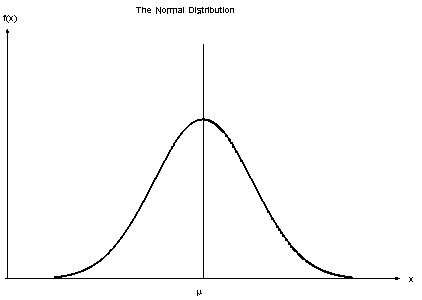
Are you saying you're certain that that's the probability distribution?

Are you saying you’re certain that that’s the probability distribution?

Whenever anyone says that some statement’s truth is probable, whether they give a numerical percentage or not, they are making a definite knowledge claim: that the statement’s truth is probable. Whether the probability is measured by a percentage, or relative to some other statement(s), the person is claiming that that is the probability’s measure.

In other words, the person claiming a probability is claiming a certainty about the probability, itself.

If such a person claims that his estimate of the probability is based on another probability, then the question becomes, “What is the prior probability based on?” The failure to provide at least one certainty at the foundation of one’s estimate of such probabilities leads to an infinite regress, or to a baseless circle–neither of which is rationally tenable.

Thus, for any claim of probability to be based in reason, it must be founded on at least one absolute certainty. And so a claim about the probability of any statement’s truth implies at least one claim to certain knowledge.

—–

Related Posts:

Taking Philosophy Seriously…

Objectivism vs. Intrinsicism vs. Subjectivism: A Short Summary

The Arbitrary (from The Objectivism Seminar)

The Bible (New Testament) as Evidence

Proceeding from Axioms in Objectivism – YouTube Edition

QuickPoint 4: It Is Not Racist to Judge One Culture Superior to Another

A culture is a set of ideas and practices that constitute a general way of thinking about the world and a typical way of life. Ideas can be correct or incorrect. Practices based on those ideas can be conducive to human life, or destructive of it. In short, ideas and practices can be objectively good or bad for people.

The judgment of certain cultures (ideas and practices) as better than other cultures is entirely separate from the phenomenon of racism. Racism, broadly, is the idea that one’s race, genetics, or ancestry is a determining factor in the content of his or her consciousness. Consequently, it is the idea that one can determine something about what someone believes by studying his genetic or ancestral lineage. This often takes the form of moral value judgments based on race or ethnicity.

There are some cultures that have historically been associated with large numbers of people in certain genetic groups, such as “Jewish culture” and “American Black culture.” But there is no necessary connection between genetics and culture. Anyone can be a part of any culture, according to his education and personal choices. Thus, a judgment of “American Black culture” as inferior to “Chinese-American culture” is not a judgment of an African lineage as inferior to a Chinese lineage. It is simply an acknowledgment of the fact that the cultural ideas and practices that have traditionally been accepted by large numbers of African-Americans are less conducive to human well-being than those that have traditionally been accepted by large numbers of Chinese-Americans. (It is this difference that is reflected in vastly different crime rates between the two groups.)

The irony here is that it is actually racist to consider a person’s culture to be determined by his genetics. Thus, it is actually racist to consider the evaluative ranking of cultures “racist.”

—–

Related Posts:

The Nature of the Morality of Rational Egoism: Short Notes

Values Are Relational But Not Subjective

Why Morality is Not “Evolved,” But Defined and Chosen

Why a Proper Ethics is Not a Set of Social Rules, But a Complete Way of Life

Atlas Shrugged, Altruism and Egoism