Human Emotions are the Products of Beliefs and Subconscious Value Judgments

The Virtue of SelfishnessIn The Virtue of Selfishness, Ayn Rand wrote,

Just as the pleasure-pain mechanism of man’s body is an automatic indicator of his body’s welfare or injury, a barometer of its basic alternative, life or death—so the emotional mechanism of man’s consciousness is geared to perform the same function, as a barometer that registers the same alternative by means of two basic emotions: joy or suffering. Emotions are the automatic results of man’s value judgments integrated by his subconscious; emotions are estimates of that which furthers man’s values or threatens them, that which is for him or against him—lightning calculators giving him the sum of his profit or loss.

But while the standard of value operating the physical pleasure-pain mechanism of man’s body is automatic and innate, determined by the nature of his body—the standard of value operating his emotional mechanism, is not. Since man has no automatic knowledge, he can have no automatic values; since he has no innate ideas, he can have no innate value judgments.

Man is born with an emotional mechanism, just as he is born with a cognitive mechanism; but, at birth, both are “tabula rasa.” [“blank slate”] It is man’s cognitive faculty, his mind, that determines the content of both. Man’s emotional mechanism is like an electronic computer, which his mind has to program—and the programming consists of the values his mind chooses.

But since the work of man’s mind is not automatic, his values, like all his premises, are the product either of his thinking or of his evasions: man chooses his values by a conscious process of thought—or accepts them by default, by subconscious associations, on faith, on someone’s authority, by some form of social osmosis or blind imitation. Emotions are produced by man’s premises, held consciously or subconsciously, explicitly or implicitly.

Man has no choice about his capacity to feel that something is good for him or evil, but what he will consider good or evil, what will give him joy or pain, what he will love or hate, desire or fear, depends on his standard of value. If he chooses irrational values, he switches his emotional mechanism from the role of his guardian to the role of his destroyer. The irrational is the impossible; it is that which contradicts the facts of reality; facts cannot be altered by a wish, but they can destroy the wisher.

Here Miss Rand is referring to the specifically human form of emotion. But let’s start with the most basic form in which emotions manifest: in non-human animals.

Continue reading

Linktoberfest: Self-Interest, Healthcare and the Environmental Benefits of Fossil Fuels

I had an enjoyable and productive discussion with a lovely young woman on her blog. Theresa Fross just turned 18, and I can tell that she’s open to new ideas. She’s clearly intelligent and thoughtful, and we discussed Ayn Rand’s novels, the nature of life, values, self-interest, Christianity, and Buddhism. The discussion starts midway down the comments section, then, at one point, continues above my first post:

My discussion with Theresa Fross

Yaron Brook, president of the Ayn Rand Institute, discusses the immorality of the government forcing people to pay for the health care of others:

You Are Not Your Neighbor’s Health Care Provider

Alex Epstein, president of the Center for Industrial Progress, gives a lecture at Vassar College on how Fossil Fuels Improve the Planet. Right now, it is only fossil fuels that make the current human population of the earth sustainable. His talk was momentarily disrupted by environmentalist protesters:

Everyone who agrees that liberty is a good thing should read this book:

Free Market Revolution: How Ayn Rand’s Ideas Can End Big Government by Yaron Brook and Don Watkins

I especially recommend it for those who are sympathetic to the Tea Party Patriots.

—–

Related Posts:

The Nature of the Morality of Rational Egoism: Short Notes

Why Healthcare in the US is So Expensive, and What Can Be Done About It

Atlas Shrugged, Altruism and Egoism

What Caused the Financial Crisis: It Wasn’t Capitalism or Deregulation

Fossil Fuels and Environment: McKibben vs. Epstein, Full Debate

QuickPoint 5: Any Claim to a Probability is Also a Claim to a Certainty

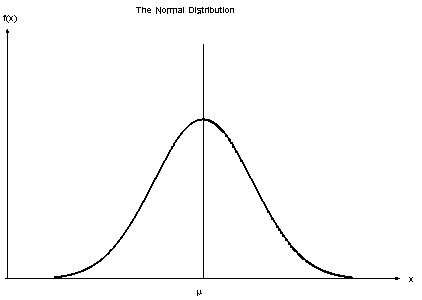
Are you saying you're certain that that's the probability distribution?

Are you saying you’re certain that that’s the probability distribution?

Whenever anyone says that some statement’s truth is probable, whether they give a numerical percentage or not, they are making a definite knowledge claim: that the statement’s truth is probable. Whether the probability is measured by a percentage, or relative to some other statement(s), the person is claiming that that is the probability’s measure.

In other words, the person claiming a probability is claiming a certainty about the probability, itself.

If such a person claims that his estimate of the probability is based on another probability, then the question becomes, “What is the prior probability based on?” The failure to provide at least one certainty at the foundation of one’s estimate of such probabilities leads to an infinite regress, or to a baseless circle–neither of which is rationally tenable.

Thus, for any claim of probability to be based in reason, it must be founded on at least one absolute certainty. And so a claim about the probability of any statement’s truth implies at least one claim to certain knowledge.

—–

Related Posts:

Taking Philosophy Seriously…

Objectivism vs. Intrinsicism vs. Subjectivism: A Short Summary

The Arbitrary (from The Objectivism Seminar)

The Bible (New Testament) as Evidence

Proceeding from Axioms in Objectivism – YouTube Edition

Wealth is Created by Action Based on Rational Thought

One little bit of high-tech wealth brought to you by a lot of human thought.

One little bit of high-tech wealth brought to you by a lot of human thought.

Wealth consists of the life-promoting goods and services that people have access to. Wealth, (beyond fruit) does not grow on trees. Luxury homes do not spring up from the earth by themselves. Seasoned pork roasts do not fall from the sky. Wealth must be created by human activity.

But what kind of human activity generates wealth? Is it desiring? Does simply wanting a new car make it appear? Despite what most Keynesians will tell you, I’m afraid that it will not. (1) People have to act to create wealth. But what kind of action? If you flail your arms about mindlessly, will that create wealth? Obviously not. What is needed is action based on rational thought: That is, taking stock of one’s surroundings and the actual needs of oneself and/or others, then figuring out how to use one’s surroundings to create what is needed for the promotion of such human life, (i.e. wealth.)

To provide food, people need to think about how to plant and harvest, how to hunt, how to maintain livestock, how to store crop yields without spoilage, how to keep and prepare meat safely, etc. If no one thinks at all, everyone starves. But is all that’s required to reach today’s level of wealth, minimal, routine, low-level thought? Continue reading

Wealth is Not Money — Monetary Wages vs. Real Wages

MoneyStack-small

Not wealth.

There are many confusions that many people hold about economics today. One fairly common one that I’d like to address is the confusion of wealth with money.

Wealth consists of the actual goods and services that are available to a person. Food, medicine, clothing, houses, televisions, computers, jewelry, the services of a doctor–all of this is wealth.

Money, on the other hand, is the medium of exchange used to indirectly barter wealth. Unlike wealth, having money does you no good by yourself on an island. If the money supply in an economy is doubled, this does not increase the amount of wealth in that economy. What increases wealth in an economy is the production of material goods and the offering of valuable services.

The confusion between money and wealth tends to arise because, on an individual level with a given money supply, the way one gets access to more wealth is to get more money. But the way money translates into wealth is not a simple “more nominal money equals more wealth,” but “having a greater percentage of the money in the economy entitles one to a greater percentage of the wealth in that economy that one doesn’t already own.” Money is a claim to the wealth produced by others, (who are willing to sell) relative to the total money supply and the total wealth.

Money--Wealth Ratio

When people create wealth by producing valuable goods from raw materials or using skills to offer services, then trade these for money, they give value to the money in circulation. If they are able to produce wealth (of a type that’s needed/desired) faster than it’s consumed, they increase the value of the money in circulation. Since there are more goods and services chasing the same amount of money (assuming no more money is printed/created) the prices of the goods and services decrease. Continue reading

The Formal Refutation of Determinism and The Validation of Free Will (Libertarian Volition)

fork-in-the-road

Determinism is the doctrine that all events, including human choices, are the necessary results of prior events, and that no human decision could have been different than it was.

Objectivism holds that determinism, specifically with respect to human conceptual consciousness, is self-refuting, because it makes conceptual knowledge of any kind impossible. Since this includes the premise of determinism itself, such determinism is incoherent. This self-refutation of determinism extends not only to so-called “hard determinism,” but to compatibilism, as well. In fact, it extends to any theory that does not recognize a fundamental choice made by the individual that determines conceptual beliefs.

(The only way to self-consistently hold determinism is to hold that conceptual beliefs are completely infallible, and that there is no such thing as a false belief. And then there would be no need to argue for determinism or even to assert it: everyone would agree on every issue with which they had experience.)

Thus, a libertarian theory of free will is the only type that is tenable. The rest of this post will explain how and why this is so. First, for intuitive simplicity, I will make use of a very apt analogy for human minds, beliefs, and truth. Then I will present a formal reductio ad absurdum of physical-mental determinism in both an unabbreviated and an abbreviated form. Then I will briefly describe the Objectivist theory of free will (volition) and its consistency with the Objectivist view of causality and the laws of physics. Continue reading

QuickPoint 3: The Basis of Ayn Rand’s Ethics in a Nutshell

The Virtue of SelfishnessI observe long-term survival that I may objectively define human flourishing,* and the means to it. I aim at my objective flourishing that I may achieve happiness.

*Flourishing” is fulfilling one’s natural goal as well as possible. For living organisms, this means fulfilling an ideal pattern or mode of life as the type of organism each is. For man, this means choosing to make maximal use of his basic, distinctive means of survival–his conceptual faculty. Rand identifies this as the “survival of man qua man.”]

This is, in my understanding, the most basic summary of Rand’s program in “The Objectivist Ethics,” an essay within The Virtue of Selfishness. I think that keeping these two sentences in mind while reading the essay will help many people understand Rand’s points more fully.

—–

Related Posts:

The Nature of the Morality of Rational Egoism: Short Notes

Values Are Relational But Not Subjective

Why Each Person Can Have Only One Ultimate Value

Why a Proper Ethics is Not a Set of Social Rules, But a Complete Way of Life

Atlas Shrugged, Altruism and Egoism

The Wages of Altruism: Domestic Abuse

“If anyone would come after me, let him deny himself and take up his cross and follow me.

“If anyone would come after me, let him deny himself and take up his cross and follow me.”    — Jesus of Nazareth

Altruism is not the equivalent of helping friends, or general benevolence to strangers. Altruism is putting the interests of others first, before your own. It is harming yourself and your life so that others may be better off (allegedly.) It is giving of yourself to others when it is against your long-term interests (mental and physical) to do so.

Christianity manifestly preaches this self-sacrifice for others–this altruism–with respect to one’s own interests in the real world:

“But I tell you, do not resist an evil person. If anyone slaps you on the right cheek, turn to them the other cheek also. And if anyone wants to sue you and take your shirt, hand over your coat as well. If anyone forces you to go one mile, go with them two miles. Give to the one who asks you, and do not turn away from the one who wants to borrow from you.

“You have heard that it was said, ‘You shall love your neighbor and hate your enemy.’ But I say to you, Love your enemies and pray for those who persecute you…” –Jesus (Matthew 5:39-44)

Continue reading

Dr. Burzynski and Hank Rearden: Real Life Mimicks Atlas Shrugged…Again

atlasshruggedIn the novel, Atlas Shrugged, the great steel tycoon, Henry “Hank” Rearden and his assistants create a metal alloy that’s stronger, lighter and cheaper to produce than steel. For this great achievement, the government subjects Rearden to every form of business obstruction it can muster. This includes a propaganda campaign, new laws and attempts to badger Rearden into selling the rights to the metal to a government institution.

In the real world, Dr. Stanislaw Burzynski and his team developed a cancer treatment that’s more effective (for some cancers), safer to administer and that produces much milder side-effects than radiation and traditional chemotherapy. For this great achievement, Dr. Burzynski was subjected to a harrowing, multi-year ordeal of interference by the FDA and state government.

This incredible, real-world progression of events is meticulously and compellingly documented in the 2010 film, “Burzynski,” currently available on Netflix streaming.

While the documentary is a searing indictment of the FDA, it is less compelling in its attempt to implicate the competitive drive of big pharmaceutical companies as the motive power behind the persecution of Burzynski. The evidence for this connection is relatively scanty. But it is certainly possible that there is some influence there, and it is definitely true that the FDA’s persecution of Burzynski served to insulate “big pharma” from competition. This would be another real-world parallel to Atlas Shrugged. There the politically connected steel baron, Orren Boyle, is involved in the government persecution of Hank Rearden, in order to eliminate his more able, productive and efficient competition.

But the lesson to draw from “Burzynski” is not that the pharmaceutical industry needs to be more heavily regulated, or that the FDA needs more “oversight.” The lesson is that the FDA needs to be abolished. Companies of all kinds will always want to remove obstacles and competition from their paths, but without the FDA regulatory machinery, they would have no way to do this by legalized force. They would only be able to overcome competition through superior efficiency and customer service. (Any coercive methods would be criminal.)

Moreover, the regulatory institutions of the state give politicians and bureaucrats the power to violate the decisions of individuals and private companies in the name of “the public interest.” This distorts economic decision-making, cripples market efficiency, and leads to pressure group warfare as described by Ayn Rand in Capitalism: The Unknown Ideal:

‘So long as a concept such as “the public interest” (or the “social” or “national” or “international” interest) is regarded as a valid principle to guide legislation—lobbies and pressure groups will necessarily continue to exist. Since there is no such entity as “the public,” since the public is merely a number of individuals, the idea that “the public interest” supersedes private interests and rights, can have but one meaning: that the interests and rights of some individuals take precedence over the interests and rights of others.

‘If so, then all men and all private groups have to fight to the death for the privilege of being regarded as “the public.” The government’s policy has to swing like an erratic pendulum from group to group, hitting some and favoring others, at the whim of any given moment—and so grotesque a profession as lobbying (selling “influence”) becomes a full-time job. If parasitism, favoritism, corruption, and greed for the unearned did not exist, a mixed economy would bring them into existence.

‘Since there is no rational justification for the sacrifice of some men to others, there is no objective criterion by which such a sacrifice can be guided in practice. All “public interest” legislation (and any distribution of money taken by force from some men for the unearned benefit of others) comes down ultimately to the grant of an undefined, undefinable, non-objective, arbitrary power to some government officials.

‘The worst aspect of it is not that such a power can be used dishonestly, but that it cannot be used honestly. The wisest man in the world, with the purest integrity, cannot find a criterion for the just, equitable, rational application of an unjust, inequitable, irrational principle.’

In this case, the “public interest” coincides with the short-range “protection” of the major pharmaceutical companies, since their “partnership” with the FDA represents the “established system” of “ensuring the safety and efficacy of drugs.”

If the US were to institute a system of government that only protects the individual rights of citizens from the coercion and fraud of others, its people would be much better off than with the FDA.

—–

Related Posts:

America Before The Entitlement State

19th-Century Capitalism Didn’t Create Poverty, But Reduced It

How to Show That Taxation is Robbery

QuickPoint 2: Altruism Supports Coercion…

What Caused the Financial Crisis: It Wasn’t Capitalism or Deregulation

Dr. Burzynski and Hank Rearden: Real Life Mimicks Atlas Shrugged…Again

atlasshruggedIn the novel, Atlas Shrugged, the great steel tycoon, Henry “Hank” Rearden and his assistants create a metal alloy that’s stronger, lighter and cheaper to produce than steel. For this great achievement, the government subjects Rearden to every form of business obstruction it can muster. This includes a propaganda campaign, new laws and attempts to badger Rearden into selling the rights to the metal to a government institution.

In the real world, Dr. Stanislaw Burzynski and his team developed a cancer treatment that’s more effective (for some cancers), safer to administer and that produces much milder side-effects than radiation and traditional chemotherapy. For this great achievement, Dr. Burzynski was subjected to a harrowing, multi-year ordeal of interference by the FDA and state government.

This incredible, real-world progression of events is meticulously and compellingly documented in the 2010 film, “Burzynski,” currently available on Netflix streaming.

While the documentary is a searing indictment of the FDA, it is less compelling in its attempt to implicate the competitive drive of big pharmaceutical companies as the motive power behind the persecution of Burzynski. The evidence for this connection is relatively scanty. But it is certainly possible that there is some influence there, and it is definitely true that the FDA’s persecution of Burzynski served to insulate “big pharma” from competition. This would be another real-world parallel to Atlas Shrugged. There the politically connected steel baron, Orren Boyle, is involved in the government persecution of Hank Rearden, in order to eliminate his more able, productive and efficient competition.

But the lesson to draw from “Burzynski” is not that the pharmaceutical industry needs to be more heavily regulated, or that the FDA needs more “oversight.” The lesson is that the FDA needs to be abolished. Companies of all kinds will always want to remove obstacles and competition from their paths, but without the FDA regulatory machinery, they would have no way to do this by legalized force. They would only be able to overcome competition through superior efficiency and customer service. (Any coercive methods would be criminal.)

Moreover, the regulatory institutions of the state give politicians and bureaucrats the power to violate the decisions of individuals and private companies in the name of “the public interest.” This distorts economic decision-making, cripples market efficiency, and leads to pressure group warfare as described by Ayn Rand in Capitalism: The Unknown Ideal:

‘So long as a concept such as “the public interest” (or the “social” or “national” or “international” interest) is regarded as a valid principle to guide legislation—lobbies and pressure groups will necessarily continue to exist. Since there is no such entity as “the public,” since the public is merely a number of individuals, the idea that “the public interest” supersedes private interests and rights, can have but one meaning: that the interests and rights of some individuals take precedence over the interests and rights of others.

‘If so, then all men and all private groups have to fight to the death for the privilege of being regarded as “the public.” The government’s policy has to swing like an erratic pendulum from group to group, hitting some and favoring others, at the whim of any given moment—and so grotesque a profession as lobbying (selling “influence”) becomes a full-time job. If parasitism, favoritism, corruption, and greed for the unearned did not exist, a mixed economy would bring them into existence.

‘Since there is no rational justification for the sacrifice of some men to others, there is no objective criterion by which such a sacrifice can be guided in practice. All “public interest” legislation (and any distribution of money taken by force from some men for the unearned benefit of others) comes down ultimately to the grant of an undefined, undefinable, non-objective, arbitrary power to some government officials.

‘The worst aspect of it is not that such a power can be used dishonestly, but that it cannot be used honestly. The wisest man in the world, with the purest integrity, cannot find a criterion for the just, equitable, rational application of an unjust, inequitable, irrational principle.’

In this case, the “public interest” coincides with the short-range “protection” of the major pharmaceutical companies, since their “partnership” with the FDA represents the “established system” of “ensuring the safety and efficacy of drugs.”

If the US were to institute a system of government that only protects the individual rights of citizens from the coercion and fraud of others, its people would be much better off than with the FDA.

—–

Related Posts:

America Before The Entitlement State

19th-Century Capitalism Didn’t Create Poverty, But Reduced It

How to Show That Taxation is Robbery

QuickPoint 2: Altruism Supports Coercion…

What Caused the Financial Crisis: It Wasn’t Capitalism or Deregulation