Why “Selfishness” Doesn’t Properly Mean Being Shortsighted and Harmful to Others

Carpenter Working with Pencil and HammerThe definitions of the terms we use have consequences for our ability to think and communicate clearly.

Imagine for a moment that your friend told you that he defines “carpenter” as “one who shapes wood by shooting it with a gun.” You’re baffled and you ask him what word he uses for someone who shapes wood by other means, such as a saw, lathe and sander. He says that he really has no word for this. He has a couple of synonyms for “carpenter,” but they also carry the implication that the person shaping the wood used a gun.

Hopefully, you can see that the problem with this hypothetical situation is not merely that you and your friend are using terms differently: shooting wood with a gun is a terribly impractical way of shaping it into useful forms. If the only concepts you have of wood shaping mean using a gun to do it, then you can’t really talk about those who shape wood using the practical methods in their profession.

Ayn Rand held that the common concept of “selfishness” is in an exactly analogous position to your hypothetical friend’s use of “carpenter.” At root, “selfishness” means pursuing one’s own interests and well-being. But the common use today adds in a second element: “pursuing your interests/well-being by means that are shortsighted and hurtful to others.” In today’s culture, the approximate synonyms of “selfishness,” such as “egoism” and “self-interest,” tend to be regarded with the same connotations of shortsightedness and harmfulness, so they are not much different.

Yet Ayn Rand rejected the idea that being shortsighted and hurtful to others is inherent in pursuing one’s interests and well-being. In fact, she recognized that the pursuit of one’s genuine interests in everyday life is specifically the opposite of “shortsighted and hurtful to others.” An individual’s genuine interests require long-term planning to fulfill, and his well-being is not served by doing harm to others. Attempting to pursue one’s self-interest by shortsighted and hurtful means is like trying to shape wood into a beautiful chair by shooting it with a pistol: utterly doomed to failure.


Continue reading

On This Memorial Day, Let Us Remember, Not “Sacrifice,” But Those Who Have Fought for Freedom

The U.S. Marine Corps Color Guard marches during pass in review during the closing of a Battle Color Detachment ceremony at Eisenhower High School, Rialto, Calif., on March 4, 2012.Every Memorial Day, we hear speeches from government leaders praising what they call the sacrifices of American soldiers. On Memorial Day 2013, President Obama said:

[N]ot all Americans may always see or fully grasp the depth of sacrifice, the profound costs that are made in our name — right now, as we speak, every day.

On Memorial Day 2014, Obama said this:

Early this morning, I returned from Afghanistan. Yesterday, I visited with some of our men and women serving there — 7,000 miles from home. For more than 12 years, men and women like those I met with have borne the burden of our nation’s security. Now, because of their profound sacrifice, because of the progress they have made, we’re at a pivotal moment. Our troops are coming home. By the end of this year, our war in Afghanistan will finally come to end. And yesterday at Bagram, and here today at Arlington, we pay tribute to the nearly 2,200 American patriots who’ve made the ultimate sacrifice in Afghanistan. We will honor them, always.

But is it really “sacrifice” that we properly honor on Memorial Day? Or is it something else that we should be focusing on?

On September 11, 2001, 19 Muslim totalitarians boarded American planes and flew them into the World Trade Center buildings, the Pentagon, and the ground in Pennsylvania. What they did was a sacrifice of their lives for the sake of killing “the enemy” and defending what they saw as the sanctity, purity and salvation of their people against the “corrupting” influences of the “decadent” West. Was this act noble because it was a sacrifice? No?

Then it is not sacrifice per se that we properly honor on Memorial Day, since we do not honor all of those who sacrifice for any cause. Is it then the sacrifice of oneself for the sake of freedom? Is this what we properly honor?

Continue reading

Socialism and Welfare vs. Justice: Why Inalienable Private Property Rights are Required for Justice

A farm and a factory: examples of property that requires effort to build.In 1816, Thomas Jefferson wrote:

“To take from one, because it is thought that his own industry and that of his fathers has acquired too much, in order to spare to others, who, or whose fathers have not exercised equal industry and skill, is to violate arbitrarily the first principle of association, “the guarantee to every one of a free exercise of his industry, and the fruits acquired by it.””

Here, Jefferson is affirming the principle of individual rights, especially property rights. But don’t property rights sometimes stand in the way of justice? In any such cases, wouldn’t it be a moral imperative for government to violate property rights?

The purpose of this essay is to show that inalienable private property rights are a necessary condition of justice. That is, any violation of property rights implies injustice, to the extent of the violation. Please note that it is not the purpose of this essay to argue that property rights guarantee justice. Objectivism does not hold that property rights are a sufficient condition for justice, only a necessary condition. There is much injustice that can occur without violations of property rights. But no one, including the government, can rectify such injustices by violating property rights. Anyone attempting to do this is in the wrong, morally.

So, what is an inalienable property right? It is a principle specifying that no one else may take or otherwise use the thing a person has a right to, without that person’s permission. (All things properly called “rights” are inalienable–that is, they cannot morally be taken away; otherwise they are not “rights,” but grants of permission by someone else. Note also that one person’s rights can be waived by him, by the act of violating another person’s rights.)

A property right to a certain, distinct thing–call it “X”–is properly acquired by either 1) engaging in a productive process directly involving X, when it is not already owned by someone else, or 2) consensually trading things or services with another person for X, when that person owns X, or 3) receiving X as a gift from another person, when that person owns X. A “productive process” might be farming to produce food, building a home, building a factory, making shoes, writing software, providing services, like air conditioning repair, radio, television, movies, etc.

Continue reading

Laissez-Faire Capitalism Solves “The Tragedy of the Commons” and Deals With Negative Externalities: A Dialogue

Enjoy CapitalismAs the reddit user, /u/sobersymphony, I participated in a discussion on reddit on the subject of capitalism vs. socialism. Another user asked me in a private message (PM) about one of my statements in that discussion. The ensuing PM discussion is reprinted here with his permission:

Him: In that conversation, you said, “Circumstances that arise due to people’s voluntary choices are not examples of force. They are simply the law of cause and effect in action. That people have to work and be able to dispose of the product of their labor to live in the long term is a fact of reality that no one can wipe out. It is not coercive.”
The usual response to this is that we value freedom, but we value other things too, so we make tradeoffs. We obviously don’t want to be coerced, but we do want to live in what might be called a “fair” or “humane” society. Everyone (tautologically) wants to act in their self-interest, but sometimes it is in their self-interest to have some governing authority solve coordination problems in ways that leave everyone better off. The same author I linked to uses a hypothetical tragedy of the commons situation to illustrate this point. He explains how even a system of voluntary contracts would not solve this problem.
Analogously, in the “work or starve” situation: behind a veil of ignorance, everyone would prefer some form of coercion to prevent work conditions becoming too terrible.
How would you respond to this argument? Apologies if this is too basic, but I haven’t yet heard a satisfying answer to this.

Me: 

Apologies if this is too basic, but I haven’t yet heard a satisfying answer to this.

No, that’s fine. They’re understandable questions that are worth analyzing.

The usual response to this is that we value freedom, but we value other things too, so we make tradeoffs.

The first question I would ask is: Who is this “we”? Do all individual human beings in a society share a collective mind and collective values, like the Borg in Star Trek? No, I might disagree with you and value different things than you do. My judgment is my own, and yours is your own. So on what basis can you say that “we” value some coercive governmental programs more highly than freedom?

Continue reading

QuickPoint 7: Good Teamwork Is Self-Interested

Kobe Bryant of the Lakers passing the ball.

There’s no “I” in “team.”

So goes the common saying that encapsulates the common idea that good teamwork is selfless. But, punchy as the saying is, (and as correct as its literal meaning is) the idea that good teamwork is selfless is entirely wrong.

When a sport is team-based, it is, by its nature and rules, a cooperative activity. A proper motivation for any individual to become a player of that sport is to enjoy playing as a member of a team and to contribute to the success of the team. To enjoy the team sport, each individual should enjoy putting his skills at the service of the team’s success. The player’s personal interests should be aligned with those of the team.

It is not a selfless sacrifice for Kobe Bryant or LeBron James to refrain from showboating and hogging the basketball, when doing so would be detrimental to their team’s chances of winning. Their personal interests are best served by playing good basketball and winning games.

Ask a football player, who lost the SuperBowl for his team by showboating with the ball, whether what he did was good for him. The answer should be clear enough without having to ask.

Let us rid ourselves of the confusion that sees so many social values, such as teamwork, friendship and love as inherently selfless; while also equating “self-interest,” “egoism” and “selfishness” with shortsightedness, foolishness, childishness, materialism, and the harm of others. Let us clearly recognize that one’s own self-interest–one’s happiness–is not bought at the expense of the interests of other people.

I highly recommend the non-fiction works of Ayn Rand, such as The Virtue of Selfishness and Philosophy: Who Needs It, along with her novels, such as The Fountainhead and Atlas Shrugged.

—–

Related Posts:

QuickPoint 6: Psychological Egoism is False — Not Everyone is Selfish

Atlas Shrugged, Altruism and Egoism

Why a Proper Ethics is Not a Set of Social Rules, But a Complete Way of Life

Values Are Relational But Not Subjective

QuickPoint 1: Thinking is Individual

What Squeegee Bandits Can Teach Us About the Welfare State (Voices for Reason)

Don Watkins makes an excellent and concise point about consent and moral responsibility in this blog post at Voices for Reason:

What Squeegee Bandits Can Teach Us About the Welfare State

Here’s a bonus video: “Is Inequality Fair?” by Yaron Brook of the Ayn Rand Institute:


—–

Related Posts:

America Before The Entitlement State

19th-Century Capitalism Didn’t Create Poverty, But Reduced It

How to Show That Taxation is Robbery

On Fairness and Justice: Their Meanings, Scopes, and How They Are Not the Same

The Nature of the Morality of Rational Egoism: Short Notes

A Dialogue on Metaethics, Moral Realism and Platonism from an Objectivist Perspective

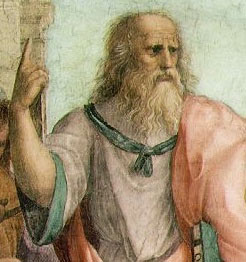
Plato points upward in Raphael's fresco, "The School of Athens." Plato was a Platonic "moral realist." He believed that a "Form of The Good" resided in extra-mental reality.

Plato in The School of Athens

What is the basis for an objective morality in under 1000 words? Where does mainstream Moral Realism go wrong? What error did Plato make that has negatively affected philosophers’ ethical assumptions even into the 21st Century? What is the meaning of modern, moral “error theory?”

If you are interested in any of these questions, I think you’ll want to see the answers given in the dialogue contained in this post.

First, a bit of context: I posted this article on the philosophy section of reddit: Answering Sam Harris’s “Moral Landscape Challenge”. The first comment below is responding to and quoting that posted article. I respond to that comment, and another poster responds to me, starting the dialogue. I am “Sword_of_Apollo” in this dialogue:

LaoTzusGymShoes:

Some of these facts may be apparent, animals certainly seem to prefer warm, comfy shelter and food to the cold, and starvation, but others seem to be fairly dramatic assertions, that would be much more convincing with argumentation.

For instance

“The basic problem with all variants of utilitarianism, including Harris’s, is that there is no reason to act for the well-being of other conscious creatures, apart from how doing so redounds on one’s own well-being.”

This is a bold assertion. I don’t see this as being obvious in the slightest. Indeed, I’d say there’s no reason to only value my own well-being, when I have every reason to believe that I’m the same sort of being as other humans*. If my well-being is important, then why shouldn’t their’s be as well?

*also, don’t animals deserve moral consideration, at least to some degree? I mean, you don’t have to be vegan or whatever, but kicking a puppy doesn’t really seem morally neutral.

Continue reading

Yaron Brook Interview on The Heartland Institute Daily Podcast: The Philosophy of Liberty

What’s the difference between “equality,” as the US Founding Fathers meant it and “equality,” as those in today’s political Left mean it? The Founders created the freest and most prosperous nation on earth. Yet did you know that the Khmer Rouge of Cambodia were motivated by “equality” in the deliberate murder of millions of people?

In this interview with Jim Lakely of the Heartland Daily Podcast, Yaron Brook, president of the Ayn Rand Institute, discusses equality, morality and general philosophy, and their connection to liberty:

Here is Part 1.

I had some trouble with the player stopping in the middle. If anyone has this problem, the direct link to the file is here:

http://heartland.org/sites/default/files/yaronbrook-part1.mp3

Here is Part 2.

And the direct link to the file:

http://heartland.org/sites/default/files/fire-yaronbrook-part2.mp3

If you found the interview enlightening or persuasive, please share this post with as many people as you can. Yaron Brook has a very important message, and is an excellent speaker. Here is a particularly good example of his many lectures:

Finally, I recommend the book Yaron Brook coauthored with Don Watkins: Free Market Revolution: How Ayn Rand’s Ideas Can End Big Government

—–

Related Posts:

How to Show That Taxation is Robbery

Wealth is Created by Action Based on Rational Thought

Why Healthcare in the US is So Expensive, and What Can Be Done About It

The Nature of the Morality of Rational Egoism: Short Notes

An Objectivist Refutation of Anarcho-Capitalism (Market Anarchy)

QuickPoint 6: Psychological Egoism is False — Not Everyone is Selfish

The Virtue of SelfishnessAyn Rand properly recognized that people do not necessarily act in their own self-interest. There is a difference between having a psychological motive to act in a certain way and a self-interested reason to act in a certain way.

Having a psychological motive can simply mean having a subjective whim, and an action taken on this basis can be very damaging to oneself (and so, not self-interested.) There is also self-sacrifice out of a desire to “be good,” i.e. to follow the duties of an irrational morality.

(Imagine a young woman who has the passion and ability to become a great artist. She wants to become an artist, has ideas for great paintings, and being an artist would be her means to a happy, flourishing life. But she accepts the morality of altruism, and she is convinced that, rather than going to a top art school, it is her duty as a “privileged American” to devote her life to saving Third-World children. This is not self-interested, just because she wants to save Third-World children out of a sense of moral duty. Nor is it self-interested just because she may get some pleasure out of “being moral”–at first.)

Given one’s basic nature, situation, experiences, abilities and psychological makeup, one’s own self-interest is objective, not a matter of one’s momentary whims. Any pleasures one pursues must be consistent with one’s overall, long-term well-being–both physical and mental–to be moral.

Those who refuse to think and continually subvert their own minds are not selfish. They need their minds–their ability to reason–to achieve any positive thing they value. What can they achieve without reason? In principle, only their own destruction, and, to the extent they use force, that of others.

—–

Related Posts:

Atlas Shrugged, Altruism and Egoism

Why a Proper Ethics is Not a Set of Social Rules, But a Complete Way of Life

Values Are Relational But Not Subjective

QuickPoint 1: Thinking is Individual

Human Emotions are the Products of Beliefs and Subconscious Value Judgments

Yaron Brook: Shrugging the Stigma of Success

In this recent talk at the University of Texas-Austin, Dr. Yaron Brook, president of the Ayn Rand Institute, discusses the general American attitude toward success in business and how it is influenced by traditional moral ideas. But does traditional morality really make sense? Is it reasonable? Dr. Brook argues that it doesn’t and it isn’t.

Part 1:

Part 2:

Part 3:

For anyone who found this talk interesting, I highly recommend reading the book, Free Market Revolution, which Dr. Brook co-authored with Don Watkins.

—–

Related Posts:

How Business Executives and Investors Create Wealth and Earn Large Incomes

Wealth is Created by Action Based on Rational Thought

What Caused the Financial Crisis: It Wasn’t Capitalism or Deregulation

Wealth is Not Money — Monetary Wages vs. Real Wages

The Nature of the Morality of Rational Egoism: Short Notes