
 I’m very much pro-capitalism. However, I agree with Bernie Sanders and many of his allies on the American Left about something. I agree that cronyism is a serious problem in the US. Businesses should not get special favors and money from the government that they didn’t earn. But where Bernie and friends seem to think the solution to cronyism is more government regulation and control, I think cronyism is a symptom of too much government regulation and control. I think the solution is purer capitalism, which means freer markets. In this essay, I’ll explain why I think this, and how I think government regulation of the economy causes cronyism, lobbying and “regulatory capture.”
Let’s start by observing a correlation: Cronyism and lobbying tend to show up in the most regulated industries, not the least regulated. Finance in the US is heavily regulated–by no fewer than eight federal agencies–and the government protects and bails out big banks. Pharmaceuticals are controlled by the FDA, and the FDA often keeps smaller competitors out of the market. Whether a sports team can build a stadium is practically controlled by the city government, and team owners typically get a bonanza of special deals and subsidies from the city. Cronyism was virtually non-existent in the less-regulated tech sector, until the government pursued the anti-trust case against Microsoft. Now, Microsoft has a division in Washington D.C. for lobbying purposes. (Apple and Google now both lobby, too.) In general, retail stores are not very heavily regulated, and there’s not a significant issue of cronyism in that field.
 What I want to see presidential candidate, Gary Johnson, say to those who supported Bernie Sanders in the Democratic primary: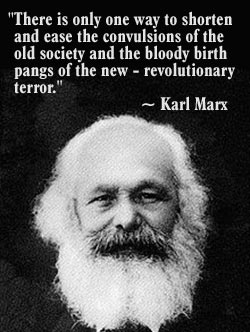

 Socialism has become more popular in the US recently, at least as a term people use for their political beliefs. Bernie Sanders and many of his young followers claim to be socialists. But what is socialism, really, and is it a moral system or an immoral one? Is it practical or impractical?
 Whether people like it or not, it is a fact that the production of valuable things requires more than physical labor. (I’m looking at you, Karl Marx, with your Labor Theory of Value and “profit as exploitation.”) This is especially true when it comes to industrial-scale mass production. To successfully deliver products at a reasonable price and quality, a company must be organized in certain ways that are effective; there must be communication and coordination between the various departments; there must be management to make sure things keep running smoothly together and that timetables are kept; there must be wealth invested for buildings, machinery and raw materials in the right amounts; any machinery and facilities must be continually maintained; there must be management of sales and distribution of the product; etc.
 As the reddit user, /u/sobersymphony, I participated in a
  Objectivism In Depth