What Interdependence Means and Why Society Isn’t Interdependent

Morpheus on Society-WatermarkInterdependence is a state of a group in which removal or destruction of one portion (subset) of the group necessarily results in the destruction of all members of the group. (1)

One example of interdependence is the set of critical organs in a human body. Taken as units in themselves, the brain, heart and lungs are interdependent: removal or destruction of one of them necessitates the destruction of the others. Another example of interdependence is the caste system in eusocial insects like bees, ants and termites. The reproductive caste and worker caste are each needed to keep the hive (and thus the other) productive and alive.

A division-of-labor society of human beings takes on a superficial appearance of interdependence. Different people do different jobs and rely on those in other specialties for raw materials and general trade. But unlike real interdependent systems, individuals in a society can exercise independent judgment and change occupations. An individual’s job is not set for life in his genetics, but chosen by the individual. People can and do get promoted, change jobs, change career types, etc. Companies in a free market can and do expand into new fields of business.

If, in a hypothetical, laissez-faire capitalist society, all those who performed one sort of productive job were suddenly removed, then it is still possible for those in other professions to take over the job and maintain a similar division of labor. There might be great hardship for a while from such a sudden displacement, but since most other individuals would be able to adapt and survive, the society fails the test for interdependence. (This is to say nothing of the more realistic, gradual removal of people from an occupation, which a capitalist society can undergo with most people hardly noticing. In contrast, if lung tissue were gradually removed from your body, it would become harder and harder for your other organs to function, and your heart would not transform to replace the missing lung tissue.)

Moreover, not all activities undertaken by all other individuals in a society are valuable to a given individual. In fact, some are positively harmful, such as dishonest schemes, irresponsible investment plans, and theft. Since each individual has free will–the choice to think or not, to judge or not, and the capacity to behave destructively toward self and others–it is up to the independent judgment of each individual to determine friend from foe. Other people can’t be dissolved into an undifferentiated mass of beneficence, let alone all be considered critical to one’s own survival. (Easily observable facts refute this collectivist notion.)

If one individual is physically injured to the point of mental damage or paralysis, then that person can become genuinely dependent on other individuals who provide his care and sustenance. But this metaphysical dependence goes only one way: the injured is dependent on the uninjured, not vice versa. There is no “interdependence” here.

Ordinary, healthy, adult human beings are fundamentally independent creatures, and assertions to the contrary are spurious. I have only ever heard vague assertions of “interdependence” from people. I have never heard “interdependence” defined, even though such a definition is a prerequisite to any rational argument about whether or not a society of human beings is “interdependent.” (2)

—–

(1) This is existential interdependence–i.e. interdependence for continued existence as entities of a certain class. The common definitions of “interdependence” and “dependence” are philosophically vacuous.

(2) Dictionary definitions are unhelpful: “interdependent – mutually dependent; depending on each other.”

“dependent – relying on someone or something else for aid, support, etc.” [Webster’s College Dictionary, 1996]

Relying, in what way? Aid from whom? What happens if the support doesn’t come from whomever? This definition is useless philosophically, since it can encompass everything from an appointment with one doctor out of many to have a wart removed, to being fed through a tube because you’re paralyzed for life. The required definition is one of metaphysical (inter-)dependence, which is philosophically significant, and is the definition I gave at the start of this article.

—–

Related Posts:

America Before The Entitlement State

The Nature of the Morality of Rational Egoism: Short Notes

Atlas Shrugged, Altruism and Egoism

On Fairness and Justice: Their Meanings, Scopes, and How They Are Not the Same

Values Are Relational But Not Subjective

Mainstream Radio Talks About Atlas MD

atlasIn this segment of his morning radio show, Bill Handel talks about the benefits of the concierge doctor service, Atlas MD. It’s a glimpse into the quality and efficiency of free-market healthcare. The only thing that’s missing is an unregulated, unsubsidized health insurance industry that mostly provides benefits for large/catastrophic medical expenses, rather than everyday expenses. This segment really is great to hear.

Bill Handel on Atlas MD

Objectivism vs. Intrinsicism vs. Subjectivism: A Short Summary

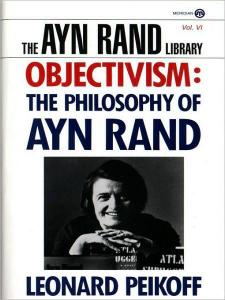
Objectivism-The Philosophy of Ayn RandAt root, subjectivism, intrinsicism and Objectivism are theories of the nature of concepts or “universals.” Here, I summarize them in regard to their view of the nature of truth and knowledge. Since truth is an attribute of statements composed of concepts, each school’s view of truth is a direct outgrowth of its view of concepts.

Subjectivism holds that truth, in effect, resides only in the mind. For a subjectivist, a particular statement can be true for one person and false for another, based solely on one’s mental choices, subjective processing, or emotions. (Kant (by implication), Wittgenstein, James, Sartre, etc.) “Truth” amounts to whatever one believes, and there is no such thing as “knowledge” of reality; only some sort of “experience” inside one’s own mind.

Intrinsicism holds that truth resides disembodied out in the world. Typically, intrinsicists hold that all people have to do is somehow “open their hearts to God,” or “pay attention to their intuitions,” or “open their minds to the light of truth,” and the “external truth” will infallibly push its way in. If the truth is already “out there,” then there’s no reason to think that any special processing is required to reach it; one merely has to absorb it. (Plato, Aristotle (partially, in regard to essences), Apostle Paul, Augustine, etc.) For an intrinsicist, conceptual knowledge is whatever external truths one happens to have absorbed. A particular statement is “true” for everyone, whether they have any evidence or not. (And it’s an arbitrarily answerable question whether various people can be held responsible for not grasping all the “floating truth” out there.) (1)

Objectivism holds that truth and falsehood are aspects of conceptual knowledge. Truth (and perceptual knowledge) is a relationship between a consciousness and reality. Truth is reality, as conceptually processed by a consciousness. Truths do not exist disembodied in external reality. Only physical entities (and their aspects–including other consciousnesses) exist in external reality. I can only reach a truth when I choose to conceptually process percepts by reasoning (by the method of logic.) For an Objectivist, a particular statement can be true for one person and false for another, only when there is a radical difference in the relevant perceptual evidence available to the two people. It does not depend on mental choices, subjective processing, emotions, or whims. (2) A statement can also be arbitrary for one person and either true or false for another: People can have different levels of evidence that change how the statement ranks on their “epistemological determinacy” scale. (From arbitrary, to possibly true or false, to probably true or false, to certainly true or false.)

There is much more to be said about this topic, and I recommend Objectivism: The Philosophy of Ayn Rand, by Leonard Peikoff, for more.

—–

(1) To be clear, most modern, intellectual intrinsicists (and many such subjectivists) go to great pains to cloak their theory of knowledge in the appearance of reasoning from observation. They use the language of natural science and the formalism of deductive arguments. But this is all rationalization or inconsistency, because, for intrinsicists, the ultimate basis of “knowledge” is just to “feel the [allegedly external] truth.” For subjectivists, whatever their pretenses about subjectivism being necessitated by objective science, that self-contradiction wipes out objectivity on their part, and they thus imply that there’s no such thing as knowledge of reality. (What distinguishes knowledge of reality from fantasy is that knowledge is objective.)

(2) Some clarification on mental choices and truth: When I say that truth does not depend on mental choices, I am referring to what one might call “normative truth”: what the person ought to consider true. This depends solely on what parts of reality the person has observed, (i.e. what evidence he has.) What the person will actually claim as truth does depend on a mental choice: the choice to think about the evidence or not. This is why I say, “I can only reach a truth when I choose to conceptually process percepts by reasoning…” The normative truth is a potential I have, based on my current context of perceptual evidence. Reaching this truth is exercising the choice to fulfill (recognize) the normative truth.

Note also that the position of one’s body can be affected by prior mental choices. Only in this narrow sense can what one perceives–and thus one’s normative truth–be affected by mental choices. Once one has actually perceived something, mental choices are irrelevant to the normative truth.

[Substantial Edit: 2/28/15: My statement that, “For an Objectivist, a particular statement cannot be true for one person and false for another, (2) but it can be arbitrary for one person and either true or false for another,” in the fourth paragraph was altered to say that it is possible for something to be true for one person and false for another, based on evidence. I no longer agree with the old statement, and I don’t think Objectivism supports it. Footnote (2) was also altered to explain the current view.]

—–

Related Posts:

Proceeding from Axioms in Objectivism – YouTube Edition

The Proof of Free Will (Libertarian Volition)

Taking Philosophy Seriously…

A Refutation of the Argument from Design

Ayn Rand on Politicians, Ideas and Compromise

Quote

“Commentators often exhort some politician to place the interests of the country above his own (or his party’s) and to compromise with his opponents–and such exhortations are not addressed to petty grafters, but to reputable men. What does this mean? If the politician is convinced that his ideas are right, it is the country that he would betray by compromising. If he is convinced that his opponents’ ideas are wrong, it is the country that he would be harming. If he is not certain of either, then he should check his views for his own sake, not merely the country’s–because the truth or falsehood of his ideas should be of the utmost personal interest to him.”

–Ayn Rand, “Selfishness Without a Self,” Philosophy: Who Needs It

The Scope of Evidence Pertinent to a Proposition Corresponds to the Scope of the Proposition

General evidence can prove generalizations. Specific evidence is required for specific propositions. The scope of sensory data that can tie a statement to reality (serve as evidence) varies with the scope of the statement.

If I make the statement, “All men have heads,” then the scope of potential, direct evidence for this statement (and counterexamples) is all men. I can observe a few random men and have a sensory basis to at least hypothesize that “All men have heads,” is true. (Exactly when I can logically say that a generalization is proven, is the subject of the epistemology of induction. While the principles of general induction are not yet fully known, the philosophy of Objectivism and the principles of modern science/technology show that induction works. I recommend Dr. Peikoff’s course, Objectivism Through Induction.)

If, on the other hand, I make the statement that “Julius Oglethorpe III lives at 10 Warkworth Terrace in Cambridge, England,” then I can’t gain a basis for hypothesizing that statement (let alone proving it) by observing a few random men. I need evidence that pertains to the specific statement at hand. To hypothesize, I need to see effects of the fact that Julius Oglethorpe III exists, or the fact that 10 Warkworth Terrace exists. To prove this statement, I need to see a set of facts that all evidence shows can only come from the fact that a man with this name lives at this address.

In both cases, the evidence that warrants the hypothesis or conclusion reduces to sensory data. But the evidence for the specific statement is much more specific than that for the general statement.

[Note: This short article was derived from a longer comment I made at “The Christian Egoist” blog: D’Souza vs. Bernstein: Is Either Good for Mankind?]

—–

Related Posts:

Proceeding from Axioms in Objectivism – YouTube Edition

The Proof of Free Will (Libertarian Volition)

Taking Philosophy Seriously…

A Refutation of the Argument from Design

America Before The Entitlement State

This article by Yaron Brook and Don Watkins should be seen by all Americans, and indeed, everyone else. It describes how people dealt with sudden injuries, deaths and the various disasters that can befall people, before government welfare programs and Social Security:

America Before The Entitlement State

Here’s a video reading of a part of an essay from Capitalism: The Unknown Ideal by Ayn Rand:

—–

Related Posts:

19th-Century Capitalism Didn’t Create Poverty, But Reduced It

How to Show That Taxation is Robbery

QuickPoint 2: Altruism Supports Coercion…

The Nature of the Morality of Rational Egoism: Short Notes

19th-Century Capitalism Didn’t Create Poverty, But Reduced It

Here’s an article by Yaron Brook and Don Watkins on the near-laissez-faire capitalism of the 19th Century:

Capitalism In No Way Created Poverty, It Inherited It

—–

Related Posts:

How to Show That Taxation is Robbery

QuickPoint 2: Altruism Supports Coercion…

Why “Anarcho-Capitalism” is Wrongheaded

The Nature of the Morality of Rational Egoism: Short Notes

A Philosophy Professor Discusses Ayn Rand in his Ethics Class

Dr. Gregory Sadler of Marist College recently discussed Ayn Rand’s The Virtue of Selfishness in his Spring 2013 Ethics class and posted the video to YouTube:

Dr. Sadler is not an Objectivist, but he gives what is, in my view, a good introductory presentation on Rand’s ethics. I encourage anyone interested in the broader study of Rand in academia, to watch this video (at least in part) and leave polite comments on the YouTube video page.

My main critiques of Dr. Sadler’s presentation have already been voiced in the page comments. They are the following:

Overall, this is a very good presentation of Rand’s ethics. Thank you, Dr. Sadler.

Just a few points: Contrary to 52:48, Rand wouldn’t say the choice of friends is arbitrary, but ought to depend on their objective virtues/values. Vicious people harm one’s own life when you’re involved with them; virtuous people typically benefit one’s own life.

Also worth emphasizing: Man *creates* wealth/values (material and spiritual) by acting on proper reasoning. There isn’t a fixed “pie.”

Also, Rand regards virtues as eminently practical. A breach of integrity has very real, self-destructive consequences in the long-term. There is no gap between morally principled action and practical action. (Practical for achieving long-term flourishing.)

Finally, “Ayn” rhymes with “mine.” : )

—–

Related Posts:

The Nature of the Morality of Rational Egoism: Short Notes

Atlas Shrugged, Altruism and Egoism

Values Are Relational But Not Subjective

The False Freedom of “Equality of Opportunity”

In mainstream discourse in the US, “equality of opportunity” is taken as an uncontroversial rallying cry for both “conservatives” and “modern liberals.” It’s typically seen as a more reasonable alternative to the openly socialist “equality of results.”

Don Watkins, of the blog, LaissezFaire, has written two posts exposing the fact that “equality of opportunity,” taken literally, is just as irrational and unjust a notion as “equality of results.” (If it’s not taken literally, then it’s an extremely vague term and shouldn’t be used.)

What matters for the justice of a society is not “equality of opportunity” but the absence of initiated coercion.

Just Say “No” to Equality of Opportunity

Who Needs Opportunity?

—–

Related Posts:

On Fairness and Justice: Their Meanings, Scopes, and How They Are Not the Same
How to Show That Taxation is Robbery

QuickPoint 2: Altruism Supports Coercion…